


Introduction: The Invisible Friction in the UV Revolution
In the current global beauty tech landscape, the UV Lash Extension System has rapidly evolved from a “futuristic concept” to an indispensable tool for high-end salons worldwide. As a result, the market is witnessing an unprecedented surge in demand for high-performance UV Lash Light hardware. However, for entrepreneurs, distributors, and established salon brands, this gold rush presents a significant strategic dilemma. Specifically, while the barrier to entry seems low, the long-term survival of a brand depends heavily on its hardware foundation.
Consequently, many business owners find themselves at a crossroads: should they opt for the speed and affordability of a “Public Mold,” or invest in the exclusivity and premium positioning of a “Private Mold”? This decision is not merely about aesthetics; rather, it dictates your entire financial ecosystem—from initial profit margins to your ultimate brand perceived value. Furthermore, the choice between these two manufacturing paths determines whether you are building a temporary “trend-driven” shop or a scalable, sustainable “industry-leading” brand.
In the following analysis, we will pull back the curtain on the hardware supply chain. We will go beyond surface-level marketing to reveal the “Black Box” of UV Lash Lamp manufacturing. By doing so, we aim to empower you with the technical and financial insights necessary to choose the most profitable path for your UV Lash System venture.
1. Understanding the Fundamentals of the UV Lash Light Supply Chain
Before choosing a path, one must first understand how a UV Lash System is actually constructed. Typically, the hardware is comprised of three core elements: the Industrial Design (ID), the Internal Circuitry (PCB/LED), and the Optical Lens.
1.1 What is a Public Mold (Open Tooling)?
A Public Mold, which is often called “Open Tooling,” refers to a design where the factory owns the injection molds. Therefore, these designs are available to the general market. Any brand can approach the manufacturer, request a logo print, and subsequently begin selling the UV Lash Light immediately.
1.2 What is a Private Mold (Proprietary Tooling)?
In contrast, a Private Mold is a “closed” design. In this scenario, you hire industrial designers to create a unique aesthetic and functional structure for your UV Lash Lamp. Because you pay for the steel molds, the factory is legally prohibited from selling that specific design to any other client.
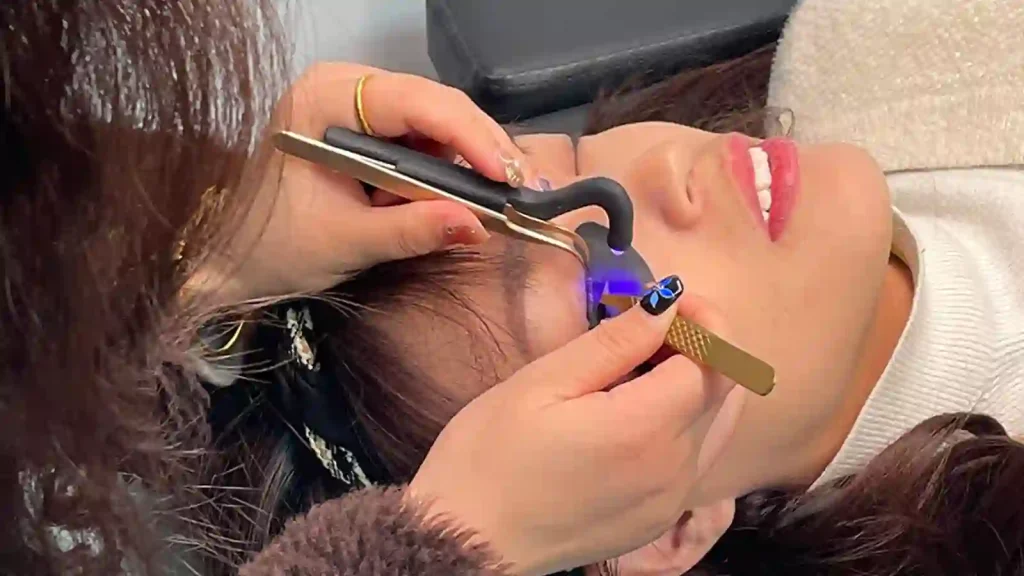
2. The Case for Public Molds: Speed and Market Testing
For many new entrants in the UV Lash Wholesale market, Public Molds are the most logical starting point. However, it is important to remember that “low cost” does not always mean “low risk.”
2.1 Low Barriers to Entry
The primary advantage of a Public Mold UV Lash System is the lack of upfront capital expenditure. Since the molds already exist, you avoid the heavy investment required for tooling. As a result, you can allocate your budget toward marketing and SEO.
2.2 Agility and Inventory Management
Furthermore, Public Molds allow for much lower Minimum Order Quantities (MOQs). For instance, you can often test the market with 20 or 50 units. If the UV Lash Lamp doesn’t resonate with your audience, you haven’t lost a fortune in specialized hardware.
2.3 The “Generic” Trap: Why Public Molds Fail Long-Term
Nevertheless, the major downside is the “Race to the Bottom.” If you are selling the same UV LED Lash Light as ten other vendors, your only point of differentiation is price. Consequently, this destroys your brand’s luxury positioning.
3. The Private Mold Advantage: Engineering a Luxury Brand Moat
Alternatively, if your goal is to become a market leader in the UV Lash Extension System category, Private Molds offer a “Moat.”
3.1 Aesthetic Superiority and Professionalism
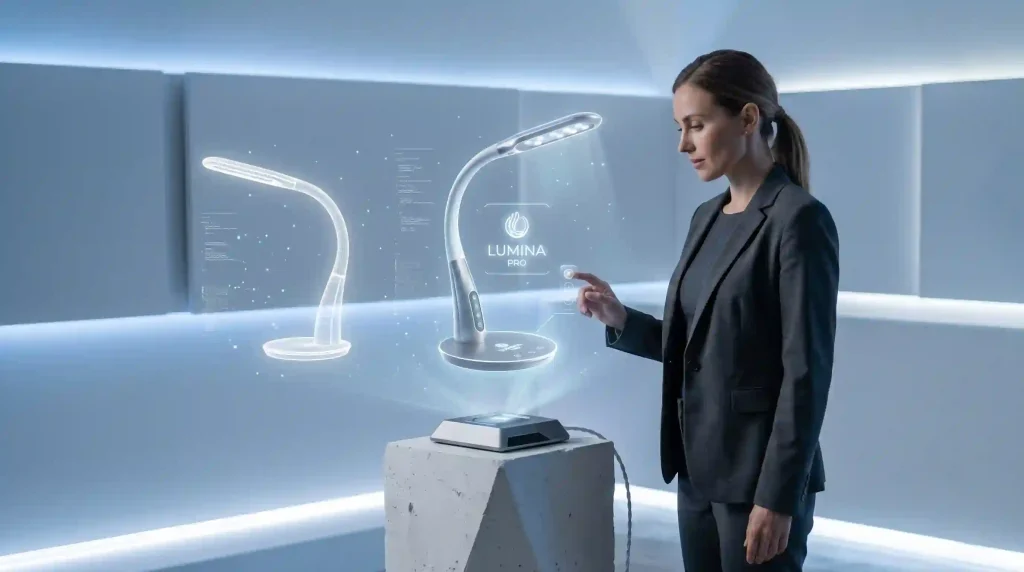
High-end salons prioritize the “Aesthetics of Space.” For example, a generic UV Lash Light can look out of place in a minimalist studio. By developing a Private Mold, you can create a UV Lash Lamp that features sleek finishes and unique ergonomic curves.
3.2 Solving Technical Pain Points
In addition to aesthetics, private molds allow you to innovate. Specifically, you can engineer a UV Curing Light with a focal length that ensures the light only hits the lash line, thereby reducing peripheral exposure for the client.
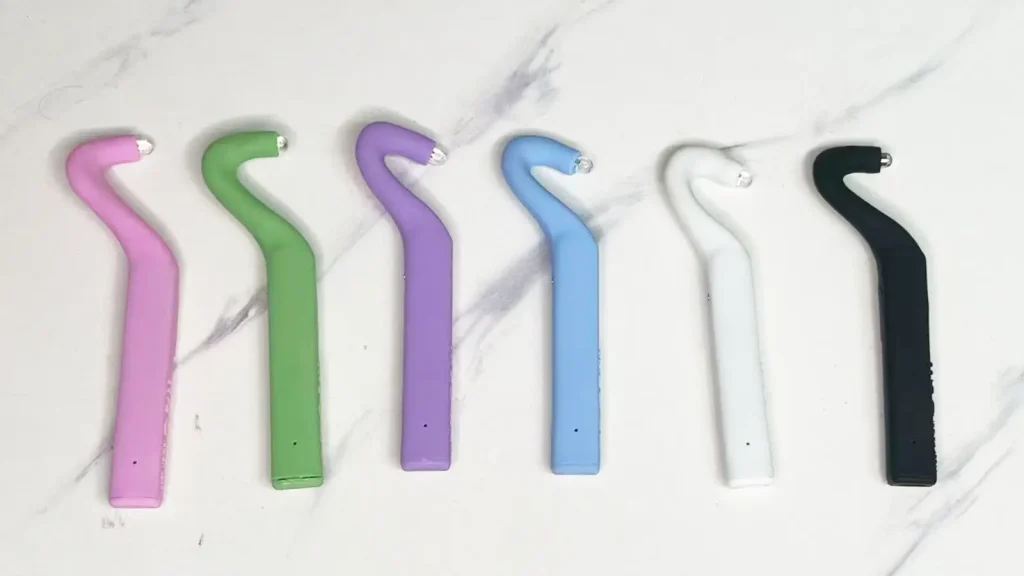
4. Deep Dive: Hidden Technical Costs Inside the “Black Box”
Whether you choose public or private, the “Hardware Black Box” contains components that drastically affect the performance of your UV Lash Light.
4.1 The LED Chip: 395nm vs. 405nm
The heart of any UV Lash Curing Light is the LED chip. On one hand, high-end systems use Grade-A chips with a narrow spectrum (precisely 395nm-405nm). This ensures rapid curing without excessive heat, adhering to international safety standards.
4.2 Thermal Management: Aluminum vs. Plastic
Moreover, UV LEDs generate significant heat. If that heat isn’t dissipated, the light intensity drops. While private label quality includes an internal aluminum heat sink, cheap wholesale alternatives often rely on the plastic casing alone.
5. Financial ROI: Calculating the Real Cost of Manufacturing
Most B2B buyers underestimate the “Total Cost of Ownership.” To illustrate this, let’s look at the numbers.
The Public Mold ROI
Initial Cost: $0 Tooling + $100 per unit.
Marketing Requirement: Extremely high, because you must prove why your product is “better” than identical competitors.
The Private Mold ROI
Initial Cost: $10,000 Tooling + $85 per unit.
Marketing Requirement: Significantly lower, because the product sells itself through visual differentiation. Overall, the long-term sustainability is much higher.
6. How to Transition from Public to Private Molds
Fortunately, you don’t have to start with a $20,000 investment. Instead, many successful brands follow this evolution:
Phase 1: White Labeling. Buy a high-quality Public Mold UV Lash Light to build your initial customer base.
Phase 2: Semi-Custom. Next, request a custom pantone color for the existing mold.
Phase 3: Full Private Mold. Finally, once you move 500+ units a month, reinvest your profits into a proprietary design
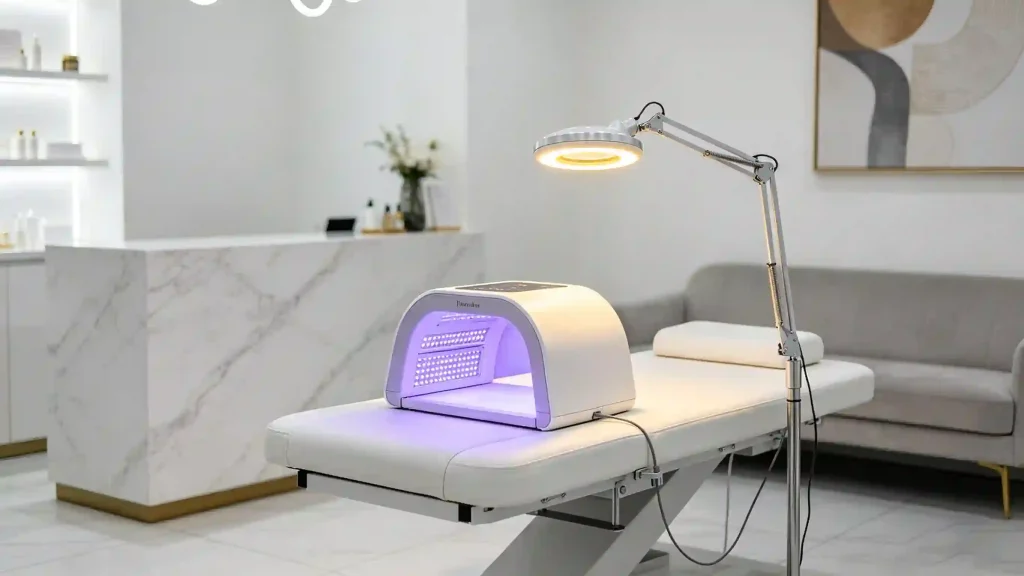
7. Conclusion: Strategic Decision-Making in a Competitive Market
7.1 The Black Box Doesn’t Have to Be a Mystery
Ultimately, the “Black Box” of hardware manufacturing does not have to be an intimidating mystery. By carefully weighing the trade-offs between the rapid speed-to-market of Public Molds and the long-term brand equity of Private Molds, you can position your UV Lash brand for maximum profitability and market resilience.
7.2 The Market Is Moving Toward Consolidation
Furthermore, it is essential to recognize that the UV Lash System market is moving toward a phase of consolidation. As the industry matures, salons and technicians will become increasingly discerning, moving away from generic, unverified hardware in favor of brands that offer proprietary safety and performance features.
7.3 Public Mold vs. Private Mold: A Clear Fork in the Road
Consequently, if you are just starting your journey, a high-quality Public Mold may be your most effective entry point.
On the other hand, if you are an established player looking to dominate your region, investing in a Private Mold UV Lash Lamp is the only way to ensure your hardware remains an exclusive asset.
7.4 The Two Non-Negotiables: Supplier Transparency + Component Quality
In either case, the key to success lies in the transparency of your supplier and the quality of the components inside the lamp.
7.5 Case in Point: How Seming Lighting Embodies the Transparent Partner Model
The principles above aren’t just theoretical. Take Seming Lighting, a 19-year veteran in LED manufacturing. They don’t just sell components; they offer a transparent partnership that de-risks the entire launch process:A supplier like Seming turns the “black box” of manufacturing into a clear, collaborative roadmap.
- Low-Risk Entry: With MOQs starting at just 1 piece for standard products, Seming allows emerging brands to validate the market without overcommitting capital—perfect for the “High-Quality Public Mold as entry point” strategy we discussed.
True Customization: For brands ready to build equity, Seming provides full private mold development, from rapid prototyping (7 business days) to logo engraving and custom packaging.
- Verifiable Quality: Their commitment to “supplier transparency” is backed by tangible certifications (CE, RoHS, FCC, IEC/EN 62471) and a clear, stage-by-stage quality control process shown on their factory floor.
7.6 From Idea to World-Class Product: We Bridge the Gap
Ultimately, our goal is to help you bridge the gap between a great idea and a world-class product.
Whether you are ready to explore the best UV Lash Light Wholesale options or you are prepared to begin the architectural design of a custom Private Label UV Lamp, our engineering team is here to guide you through every technical hurdle.
Джим Цзян

Основатель компании Seming, главный дизайнер продуктов с 20-летним опытом работы. Специализируется на кастомизации, инновациях и световых решениях для освещения фотографий, косметического освещения, инструментов для красоты и многого другого.