


UVまつげ用接着剤と通常のまつげ用接着剤の専門的な比較――硬化時間や接着強度から、湿度への耐性、アレルギーのリスク、卸売価格の経済性まで。.
簡単な答え: 従来型のまつげ用接着剤は、空気中の水分によって硬化します。このプロセスには1箇所あたり5~30秒かかり、サロンの湿度によって所要時間が変動します。一方、UVまつげ用接着剤は、UV光を照射すると即座に硬化し、外気の天候に関係なく1~3秒で完全に接着します。 1日あたり3~6人の顧客を施術するプロのサロンにとって、この速度の差は、1日あたり30~60分の追加施術時間につながります。.
長年にわたり、従来のシアノアクリレート系接着剤を使ってまつげサロンを経営してきて、最近になってUVまつげシステムの話を耳にするようになったなら、おそらく次のような疑問を抱いていることでしょう: この切り替えは、その混乱に見合う価値があるのでしょうか? 化学的なレベルでは、実際にはどのような違いが生じるのでしょうか? そして、「UVへの切り替え」は、私のサプライチェーンにとってどのような意味を持つのでしょうか?
この記事では、接着剤の化学的性質から作業フロー、卸売調達に至るまで、2つのシステム間のあらゆる重要な違いを詳しく解説しています。これにより、読者の皆様が十分な情報に基づいて判断を下せるようになります。.
各システムの実際の仕組み
従来のシアノアクリレート(CA)まつげ用接着剤
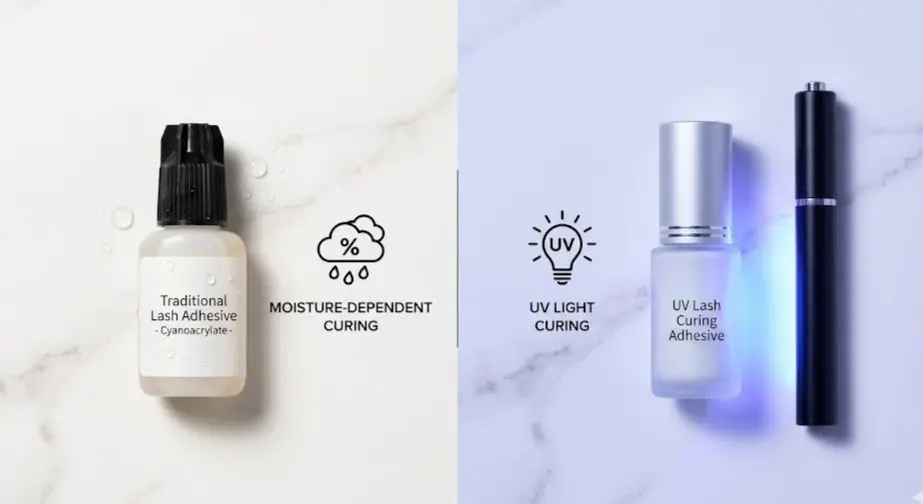
世界中で施されているまつげエクステの圧倒的多数は、依然としてシアノアクリレート系接着剤を使用して装着されています。CA接着剤は、 アニオン重合反応 水分によって反応が起こります。具体的には、周囲の湿度や自まつげの表面に存在するヒドロキシルイオンです。CA接着剤が水分と接触すると、急速に長いポリマー鎖が形成され、エクステンションを所定の位置に固定します。.
この化学的メカニズムは、数十年にわたる使用を経て、信頼性が高く、十分に理解されています。しかし、これには重大な依存関係が生じます: 相対湿度は、およそ45~65%の範囲内である必要があります。 最適な硬化速度と接着強度を得るためです。湿度の高い地域(東南アジア、海岸沿いのスタジオなど)では、接着剤の硬化が早すぎて、揮発成分が閉じ込められ、脆い接着面ができてしまうことがあります。一方、湿度の低い環境(空調の効いたスタジオ、乾燥した気候など)では、硬化が遅すぎたり、不完全なままになったりすることがあります。.
空気硬化期間(接着剤を塗布してから完全に硬化するまでの5~30秒間)の間、接着剤は活発に放出され続けています シアノアクリレート蒸気. これらの蒸気は、特徴的な刺激臭の主な原因であり、顧客と技術者の双方における接触感作の主たる原因となっています。.
UVまつげ用接着剤(光開始剤系)
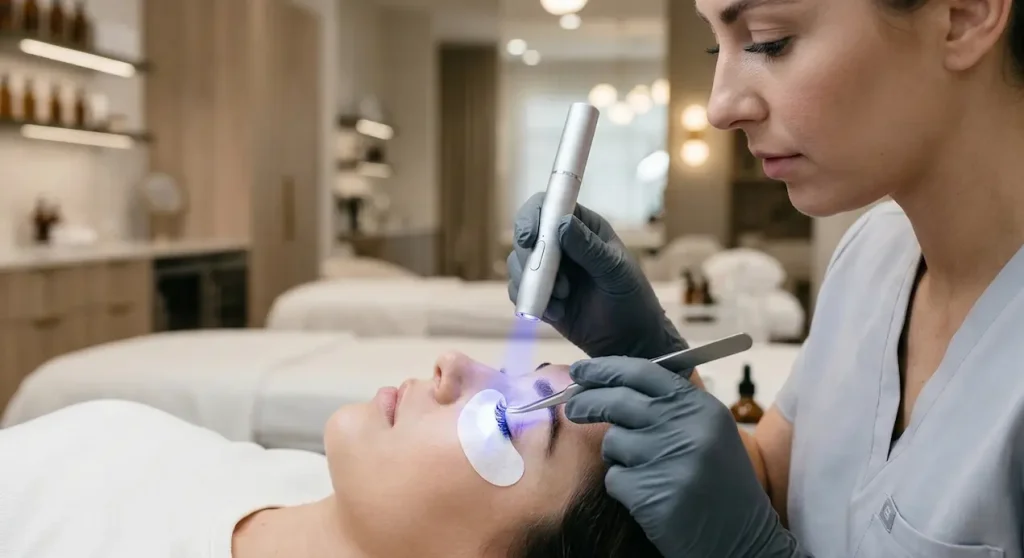
UVまつげ用接着剤は、以下の成分を配合して作られています。 光開始剤化合物 これらは、波長365 nmまたは405 nmの紫外線にさらされるまでは化学的に不活性な状態を維持しています。技術者が装着済みのエクステンションにUVラッシュランプを1~3秒間照射すると、光開始剤が紫外線のエネルギーを吸収し、接着剤のポリマーネットワークの急速な架橋反応を引き起こします。.
重要な点として: ランプが作動するまで、接着剤は硬化を開始しません. 。つまり、技術者は各接着のタイミングを完全にコントロールできるため、周囲の湿度や温度との戦いになることはありません。また、CA接着剤のように長時間の大気中での硬化期間を経ることがないため、発煙量が劇的に少なくなります。.
用語に関する技術的注記
これらのシステムは、「LEDまつげシステム」や「UV LEDまつげシステム」として販売されている場合があります。正しい呼称は「UV」です。ランプは365~405 nmの紫外線を放射しますが、これはたまたまLED光源によって生成されるものです(従来の蛍光UV管とは対照的です)。 まつげ用接着剤用の、真の意味での「可視光LED」硬化システムは存在しません。プロ用のまつげ用硬化ランプはすべて、UVスペクトル域で動作します。.
並べて比較:UV接着システムと従来の接着剤
以下の表は、どのシステムを仕入れるかを検討しているプロのスタジオ運営者や卸売業者にとって関連するあらゆる要素を網羅しています:
| 因子 | UVまつげ用接着剤 + UVランプ | トラディショナル CA まつげ用接着剤 |
|---|---|---|
| 治癒メカニズム | UV光開始剤 — ランプの照射により必要に応じて硬化する | 水分誘起型アニオン重合 |
| 1つの結合あたりの硬化時間 | 1~3秒 | 5~30秒(湿度による) |
| 湿度感受性 | なし — 湿度は関係ありません | 高 — 45~65% RHが必要 |
| 温度感度 | 低 | 中程度 — 寒いときは遅くなり、暑いときは速くなる |
| 煙・臭気のレベル | 極めて低い — 未硬化の揮発成分はごくわずか | 注目すべき点 — 自然乾燥中に放出される蒸気 |
| アレルギー/感作のリスク | 下段 — 光開始剤系増感剤はあまり一般的ではない | 高レベル — 継続的な蒸気への曝露;累積リスク |
| ボンド強度 | 正しく使えば素晴らしい | 素晴らしい — 長期にわたる実績が証明されている |
| 技術者による制御 | 「ハイ」 — 準備が整った時点で正確に硬化させる | 下段 — 時間との戦い |
| サービス・スピード | より速く — まつげを塗るたびに待つ必要がありません | 処理が遅い — 技術的に各ボンドの処理を待っている |
| 賞味期限(開封後) | 4~8週間(遮光保存) | 4~6週間(湿度・温度管理下) |
| 必要な機材 | UV硬化ランプ($15~$45 卸売り) | ランプは不要です |
| 互換性 | UV専用接着剤のみを使用してください | CA互換のエクステンションおよびラッシュならどれでも |
| プレミアム・ポジショニング | 高品質 — サービス料金が高くなる | 標準 — 競争の激しい市場 |
| OEM/プライベートブランド事業 | 非常に活発(日本、韓国、EU市場) | 飽和状態 — 価格圧縮が激しい |
切り替えの運用上の根拠:時間の計算
UVシステムの最も具体的な利点は、化学的な側面ではなく、経済的な側面にあります。片目あたり80~120本のエクステンションを使用する、フルクラシックラッシュセットを施術する技術者を例に考えてみましょう:
- 従来のCA接着剤の場合、1つの接着箇所につき、安全を期して8秒間の硬化待ち時間が必要となります。 1,280~1,920秒 1セットあたりの無駄な時間
- UV接着剤の場合、硬化時間が2秒であっても= 320~480秒
- それは 1セットあたり960~1,440秒(約16~24分)の短縮
1日あたり4セットをフル稼働させるスタジオの場合、その回復時間は 毎日1時間以上の予約可能時間 — 追加の技術者を雇ったり、営業時間を延長したり、料金体系を変更したりすることなく。年間250営業日と仮定すると、理論上、このスタジオは250セット以上を追加で予約できることになります。.
これは、B2Bディストリビューターがサロン経営者にUVシステムのアップグレードを販売する際に用いるROI(投資対効果)の論拠です。また、スタジオの効率や処理能力が徹底的に最適化されている日本や韓国といった需要の大きい市場において、UVまつげエクステシステムがプロ向け市場の主流となっている理由でもあります。.
湿度と気候:従来の接着剤がもたらす隠れたコスト
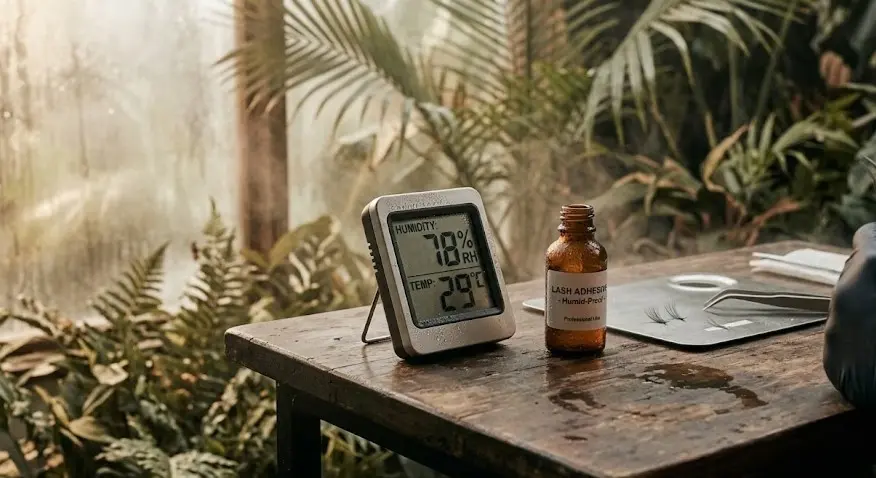
湿度の高い気候のスタジオ――沿岸都市や熱帯の国々、あるいは強力な除湿が行われていない場所――では、CA接着剤に関して次のような根深い問題に直面しています: 衝撃重合. 周囲の湿度が70~80%を超えると、CA接着剤は、エクステンションが適切に位置決めされる前に、接触した瞬間にほぼ即座に硬化してしまいます。その結果、接着位置のずれ、ホワイトブローミング(接着剤の表面に目に見える結晶化現象)、および保持力の低下が生じます。.
これを管理するには、絶え間ない環境モニタリングが必要です。各ステーションに湿度計を設置し、除湿機を一年中稼働させ、季節に合わせて接着剤を選定する必要があります。 シンガポール、タイ、ベトナム、ブラジル沿岸部、フロリダの各スタジオでは、天候の変化にも対応できるよう、通常3~5種類の異なる接着剤(速乾型、中速乾型、遅乾型、湿潤気候用、乾燥気候用)を常備しています。.
UV接着剤を使えば、この問題は完全に解消されます。硬化は湿気ではなく光によって引き起こされるため、, この接着剤は、30% RHおよび90% RHのいずれの条件下でも、まったく同じ性能を発揮します。. 熱帯地域や沿岸地域を拠点とする販売業者にとって、これはUVシステムの最も魅力的な特徴であり、現地の気候に左右されずに一貫した結果が得られるという点です。.
アレルギーと過敏症:研究が明らかにしたこと
まつげ用接着剤によるアレルギー反応は、業界内でますます深刻な問題となっています。CA系まつげ用接着剤に含まれる主なアレルゲンは エチルシアノアクリレート — 未硬化状態のモノマー。CA系接着剤が空気中で硬化する際、重合が完了する前にこれらのモノマーが蒸気として放出される。低濃度の蒸気に繰り返しさらされることが、主な原因となっている。 職業性接触性皮膚炎 まつげエクステ施術者によるものであり、複数回の施術後に約2~5%の顧客が敏感肌になる原因となっている。.
UV接着剤の配合にはアレルゲンが含まれています。光開始剤やアクリレート樹脂が含まれており、一部の人には感作を引き起こす可能性があります。しかし、その硬化メカニズムは空気によるものではなく、光によって引き起こされるため、, 未硬化の接着剤の保持時間が、5~30秒から3秒未満に短縮されました. 。これにより、1セットあたりの総蒸気曝露量が大幅に低減され、これがUVまつげエクステシステムにおいて感作率が低いと報告されている化学的根拠となっています。.
OEM製品のクレームに関する重要事項
UVまつげエクステシステムは、「アレルゲンフリー」や「無臭」といった表現で販売してはなりません。 正しい表示は、「低揮発性」、「感作リスクの低減」、または「臭いがほとんどない」といったものです。EUや日本の規制当局は、化粧品用デバイスの販売表示を厳格に審査しています。セミングの製品チームは、各市場に準拠した表示文言についてアドバイスいたします。.
UVに切り替えるべき人(そして切り替えるべきでない人)
次のような場合には、UVシステムが最適な選択肢です:
- スタジオは湿度の高い気候(平均相対湿度 60% 以上)に位置しています。
- 大量対応業務(1日あたり4名以上のクライアント)
- プレミアムサービス層をターゲットに/価格を引き上げ
- プライベートブランドや自社ブランド製品のライン構築
- 日本、韓国、またはEU市場への進出
- CAの蒸気に過敏反応を示す技術者
- 一般的なサロンのサービスとの差別化を図りたい
次のような場合には、従来の接着剤が依然として適しているかもしれません:
- 少人数・パートタイムのスタジオ(1日あたり2名以下)
- すでにCA接着剤の在庫に投資済み
- 年間を通じて相対湿度が45~55%で安定している乾燥した気候
- 顧客からは、現時点ではUVサービスの要望は出ていません
- 設備投資における予算上の制約
- 純粋なクラシックラッシュのみ(UV効果はあまり目立たない)
販売代理店向けのヒント
多くの販売代理店が、次のような商品を成功裏に提供しています 両方のシステム — 既存顧客向けにCA接着剤の在庫を確保しつつ、アップセルとしてUVスターターキットを積極的に販売促進する。UVランプ(Seming社からの最小注文数量はわずか50~100台)とUV接着剤を組み合わせた「UVスターターキット」をセット販売することで、顧客に既存の在庫をすべて入れ替えることを強いることなく、このシステムを導入してもらうことができる。.
卸売およびOEMの経済性
どのシステムを在庫管理の基盤とするかを検討している販売代理店やブランドオーナーにとって、市場のシグナルは明確です:
UVまつげエクステシステムは、最も成長著しい分野である プロ用まつげエクステ機器において。UVまつげランプ+UV接着剤+ブランドパッケージという組み合わせは、日本(プロ向け市場においてUVシステムが推定60~70%のシェアを占めている)、韓国、そして西ヨーロッパ諸国でもますます主流となりつつある、OEM製品の発売における主要な形態となっている。.
UVまつげランプを調達する際に考慮すべき主な卸売上のポイント:
- 波長の精度: ランプは、認証済みの365 nmまたは405 nmの光を出力するものでなければなりません。「近紫外線」や、波長が特定されていない可視光であってはなりません。どのサプライヤーに対しても、分光出力試験報告書の提出を依頼してください。.
- 出力(mW/cm²): 業務用ランプは、硬化距離において50~200 mW/cm²の出力を発揮し、1~3秒という安定した硬化時間を実現する必要があります。出力が不足しているランプでは照射時間が長くなり、スピード面での利点が失われてしまいます。.
- 安全認証: IEC 62471(照明器具の光生物学的安全性) EUおよびAPAC市場の大部分への輸入には、これが必要です。各市場に応じてCEおよびFCCの認証が必要です。.
- 接着剤の適合性: UVランプとUV接着剤は、必ず組み合わせて試験を行う必要があります。セミング社では、OEM顧客向けに、互いに適合したランプと接着剤の組み合わせを推奨しています。.
Semingの卸売用UVまつげランプのラインナップは、 $12 1個あたりのFOB価格 最小注文数量(MOQ)は100個ですが、300個からの注文で完全なOEMカスタマイズ(ロゴ、パッケージ、波長設定)が可能です。ランプと接着剤を組み合わせたカスタムキットについては、, 当社の製品チームまでお問い合わせください 技術説明会のため。.

よくある質問
いいえ。従来のシアノアクリレート系接着剤には光重合開始剤が含まれていないため、UV光の下で硬化が早まることはありません。UVランプは、UV専用のまつげ用接着剤でのみ効果を発揮します。これらはまったく異なる化学システムであるため、混ぜ合わせて使用することはできません。.
正しく塗布・硬化させれば、UVまつげ用接着剤は、プロ用の瞬間接着剤に匹敵する持続性を発揮します。通常、リフィルが必要になるまでの期間は4~6週間ですが、これはお客様の自まつげの成長サイクル、アフターケアの習慣、ライフスタイルによって異なります。 「超長持ち」を謳う一部のUV接着剤は、6~8週間の持続性を謳っていますが、これは製品によって異なります。どちらのシステムも、正しく使用すれば強固な接着力を発揮します。.
UVまつげ用接着剤は、眼周囲での使用に特化して配合されており、訓練を受けた技術者が、目をしっかりと閉じて保護した状態で塗布すれば安全です。 UVランプの照射時間は短く(1つの接着箇所につき1~3秒)、目そのものではなくまつげの生え際に照射されます。UVランプを選ぶ際は、定格動作距離での光生物学的安全性が試験済みの、IEC 62471に準拠した製品をお選びください。.
業務用UVまつげランプは、以下のいずれかの波長で動作します。 365 nm (深紫外線、硬化が速い、より多くの接着剤配合に対応)または 405 nm (近紫外線/紫色。光硬化速度はやや遅いが、長時間の照射においてはわずかに安全であると考えられている)。ランプの波長は、接着剤に含まれる光開始剤と一致している必要がある。UVランプを購入する前には、必ず接着剤の供給業者に互換性を確認すること。.
主な初期投資費用はUVランプです。プロ仕様のハンディ型UVまつげ用ランプの小売価格は、ブランドや機能によって$30~$120の範囲ですが、Semingなどのメーカーからの卸売価格は、標準的な最小注文数量(MOQ)の場合、通常1台あたり$12~$45です。 UV用接着剤の1本あたりのコストは、プロ用瞬間接着剤と概ね同程度です。サロン経営者にとって、切り替えにかかる総コスト(ランプ+初期のUV用接着剤の在庫)は、通常、1ステーションあたり$200未満です。.
はい、実用的な観点からはそうです。UV硬化は、技術者が作業を進めるにつれて爪1本ずつ行われるため、施術中は常にランプに手が届く状態である必要があります。作業台間でランプを共有すると、作業の流れが妨げられてしまいます。ほとんどのサロンでは、各技術者の作業台に1台ずつランプを設置しています。卸売価格であれば、効率の向上に比べれば、これは低コストの投資と言えます。.
貴社のブランド向けにUVまつげランプの仕入れをご検討中ですか?
Seming社は、OEMによる完全なカスタマイズ(プライベートブランド、波長の調整、適合する接着剤の組み合わせなど)が可能なプロ仕様のUVまつげ用ランプを製造しています。最小注文数量(MOQ)は100台からです。.