


1. Why Technical Specifications Matter
Not all UV lash lights are created equal. Two lamps that look identical on the outside can deliver completely different results—one cures adhesive in 1 second, the other leaves you with weak bonds and frustrated clients.
The difference lies in the technical specifications. Understanding these specs is not just for engineers; it is essential for salon owners selecting equipment, lash artists troubleshooting retention issues, and brands developing private-label products.
This guide breaks down the three most critical UV lash light technical specs: wavelength, irradiance, and safety certifications. You will learn what each specification means, why it matters for curing performance, and how to verify that your equipment meets professional standards.
For a step-by-step UV adhesive curing SOP, see our complete application guide.
Explore UV lash lights with verified wavelength precision and IEC 62471 safety certification.
Lorem ipsum dolor sit amet, consectetuer adipiscing elit, sed diam nonummy nibh euismod tincidunt ut laoreet dolore magna aliquam erat volutpat.
| Problem | Cause | Consequence |
|---|---|---|
| Adhesive remains tacky | Wavelength mismatch | Weak bonds, early fallouts |
| Cure is slow (>5 seconds) | Wavelength off by 10+ nm | Inefficient workflow |
| Surface cures but core is liquid | Partial wavelength match | “Shell cure” that fails under probe |
| Inconsistent results across batches | Wavelength drift (cheap LEDs) | Unpredictable performance |
2. Wavelength: The Most Critical Specification
2.1 The Sweet Spot
The wavelength of a UV lash light determines whether the adhesive cures at all. UV adhesives contain photo-initiators—chemical compounds that remain dormant until exposed to a specific wavelength of light. If the wavelength does not match, the adhesive will not cure properly.
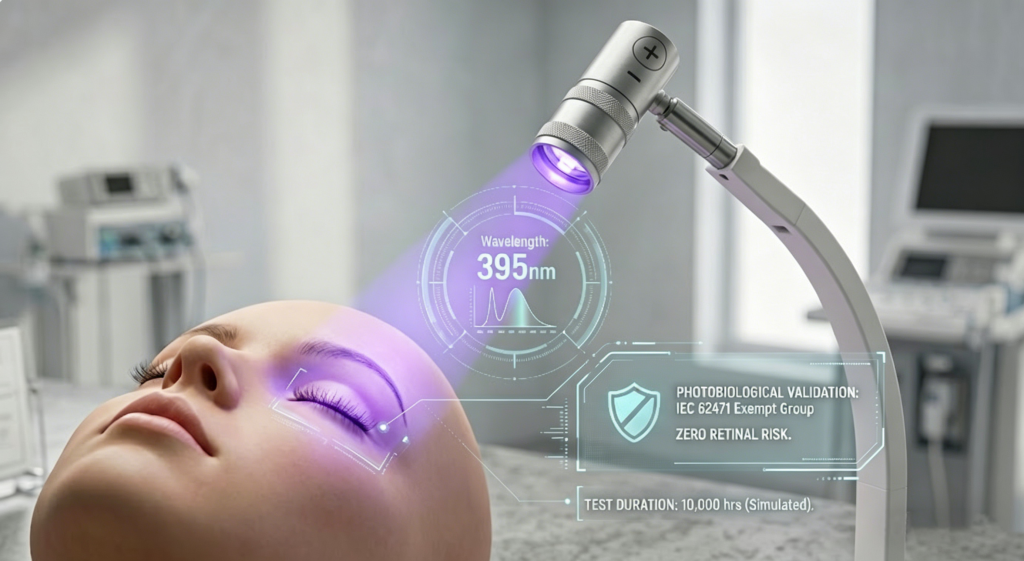
The industry standard for UV lash adhesives is 395–405 nanometers (nm).
Professional UV lash lamps operate at wavelengths between 395 and 400 nm . Some systems are designed for 365 nm or 405 nm depending on the adhesive formulation .
The “sweet spot” is 395 nm. This wavelength activates most professional UV lash adhesives efficiently and quickly—typically within 1–4 seconds regardless of room humidity or temperature .
2.2 What Happens When the Wavelength is Wrong
Wavelength drift is a particular risk with cheap LED chips. A light that starts at 395 nm may drift to 405 nm or 410 nm after 3-6 months of use. The result? Your glue stops curing properly, retention tanks, and you lose clients.
2.3 What About 365 nm?
Some UV adhesives use 365 nm photo-initiators. These are common in the nail industry but less common in lash-specific formulations. Always verify your adhesive‘s wavelength requirement before selecting a lamp.
The 395-405 nm standard is preferred for lash applications because it cures quickly without generating excessive heat—critical for client comfort and safety .
3. Irradiance: The Power Factor
3.1 What is Irradiance?
Irradiance measures the power of UV light reaching the adhesive at the working distance. It is typically measured in milliwatts per square centimeter (mW/cm²).
Irradiance determines curing speed. Higher irradiance = faster cure. Lower irradiance = slower cure and weaker bonds.
3.2 Professional Irradiance Standards
| Irradiance Level | Aushärtungszeit | Leistung |
|---|---|---|
| Below 50 mW/cm² | 5-10+ seconds | Poor retention, unreliable |
| 50-100 mW/cm² | 3-5 seconds | Acceptable for occasional use |
| 100-200 mW/cm² | 1-3 seconds | Professional performance |
| 200+ mW/cm² | <1 second | Premium, high-speed systems |
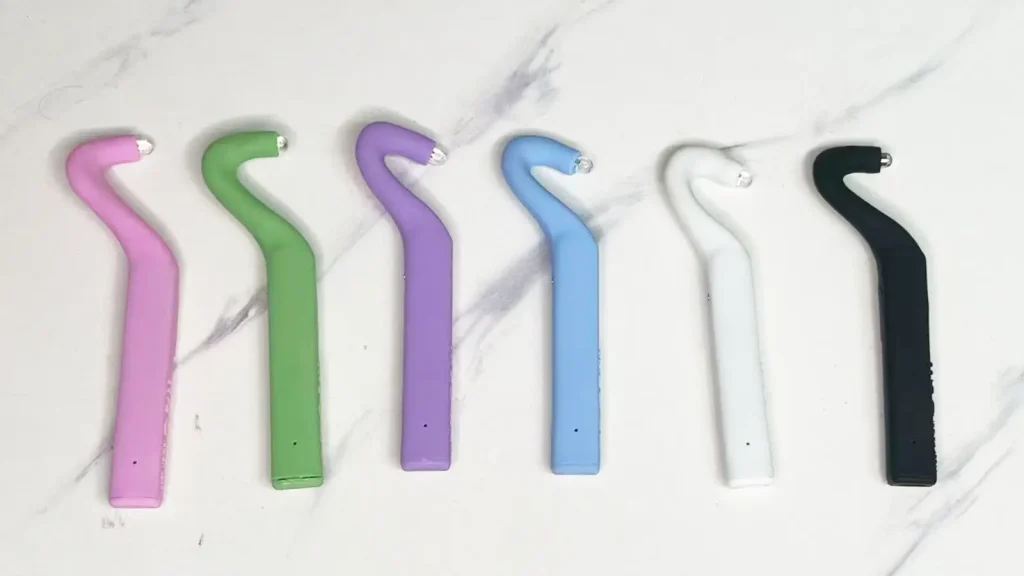
Professional UV lash lamps typically deliver 5W of power with focused optical design, achieving curing in 1–4 seconds at the lash line .
The relationship between power and cure is not linear. A 10W lamp does not necessarily cure twice as fast as a 5W lamp if the optical design is poor . The key is irradiance at the working distance—not total power consumption.
3.3 Measuring Irradiance
Without specialized equipment, you can test irradiance by:
Consistency test: Apply adhesive to a test surface and cure for the specified time. A well-cured bond should be hard and not tacky.
Scheduled replacement: Most professional UV lamps have a lifespan of 5,000-6,000 hours . Replace the lamp head or entire unit after reaching this threshold.
UV meter: For precision salons, invest in a UV meter to verify irradiance quarterly.
4. Safety Certification: IEC 62471
4.1 Why Certification Matters
UV devices used near the eyes must meet strict safety standards. Without proper certification, your equipment poses serious risks: corneal inflammation, cataracts, or long-term eye damage .
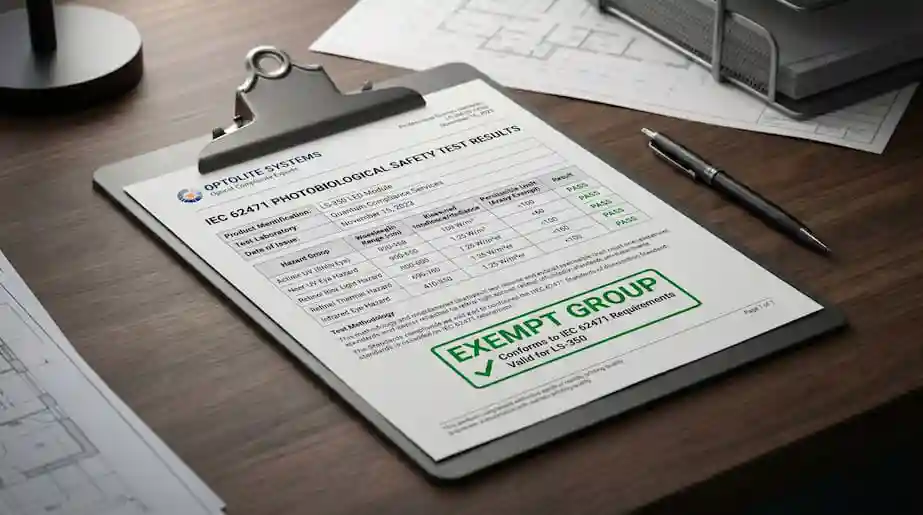
The standard governing UV lash lights ist IEC 62471, which covers the photobiological safety of lamps and lamp systems . A specific part, IEC 62471-6, addresses UV lamp products, providing requirements for:
Optical radiation safety assessment
Risk group classification
User safety information
Appropriate labelling
4.2 Risk Group Classifications
Research from the Finnish Radiation and Nuclear Safety Authority (STUK) measured six UV lash devices and found:
| Risk Group | Classification | Implications |
|---|---|---|
| RG1 | No photobiological hazard | Safest—no risk under normal use |
| RG2 | Moderate risk | Safe with protective measures |
| RG3 | High risk | Significant hazard to unprotected eyes |
The key finding: In the most powerful device measured, the UV limit value would be exceeded in just 15 seconds at 20 cm viewing distance if light was directed into the eyes .
However, during lash application, the client‘s eyes are closed, and the eyelid blocks at least 95% of UV radiation from reaching the eye . This is why eyelid protection and correct use are critical.
4.3 Required Certifications for Professional UV Lash Lights
| Zertifizierung | What It Covers | Warum das wichtig ist |
|---|---|---|
| IEC 62471 | Photobiological safety | Required for EU, Japan, and many other markets; confirms eye-safe operation |
| CE-Kennzeichnung | EU safety compliance | Mandatory for European market entry |
| RoHS | Restriction of hazardous substances | Required for EU and many other markets |
| FCC Teil 15 | Electromagnetic compatibility | Required for U.S. market entry |
4.4 How to Verify Safety Certification
When purchasing a UV lash light, ask for:
IEC 62471 test report from an independent laboratory
Risk group classification (look for RG1 or RG2)
Recommended operating distance and exposure time guidelines
Seminglight UV lash lights carry CE, RoHS, and IEC 62471 certifications, meeting safety requirements for European, North American, and Japanese markets .
UV-Wimpernlampen mit Sicherheitszertifizierung nach IEC 62471 meet the highest standards for professional salon use.
5. Other Critical Specifications
5.1 Beam Focus vs. Floodlight
Professional UV lash lights use focused beam optics that concentrate UV energy on the 5 mm adhesive zone—not the entire face .
| Beam Type | UV Distribution | Safety | Cure Efficiency |
|---|---|---|---|
| Floodlight | Wide scatter | High skin exposure | Poor—wasted power |
| Focused beam | Concentrated on bond line | Minimal skin exposure | Hervorragend |
Cheap floodlights scatter UV across the client‘s face, increasing safety risks and reducing effective curing power.
5.2 Control Mechanism
Most professional UV lash lamps use a foot pedal for activation, allowing hands-free control . Key features to look for:
Foot switch with timer: Short tap activates the lamp; auto-off after 1-4 seconds
Pre-set timer options: 1, 2, 3, 5 seconds for standardized workflows
360° flexible arm: Adjustable positioning for precise targeting
5.3 Power Supply and Lifespan
| Specification | Professional Standard |
|---|---|
| Power consumption | 5W–10W |
| Stromversorgung | 5V–1A DC adapter |
| LED lifespan | 5,000–6,000 hours |
| Garantie | 2 years typical |
5.4 Safety Recommendation
The Finnish Radiation and Nuclear Safety Authority (STUK) recommends:
Ensure the client cannot look at the light source when it is switched on
Request an IEC 62471 test report before purchasing equipment
Follow manufacturer guidelines for operating distance and exposure time
Do not rely on the eyelid alone; use protective eye pads during application
6. Specification Checklist for Buyers
| Specification | Was ist zu prüfen? | Warum |
|---|---|---|
| Wellenlänge | 395–405 nm—must match adhesive spec | Determines whether cure occurs at all |
| Irradiance | ≥100 mW/cm² at working distance | Determines cure speed and bond strength |
| IEC 62471 | Test report from independent lab | Confirms eye-safe operation |
| Risk group | RG1 or RG2 preferred | Lower risk to unprotected eyes |
| Beam design | Focused beam, not floodlight | Maximizes efficiency, minimizes skin exposure |
| Kontrolle | Foot pedal with timer | Standard professional workflow |
| Lebensdauer | 5,000+ hours | Lowers long-term replacement costs |
| Zertifizierung | CE, RoHS, FCC as required | Market access compliance |
7. Endgültiges Urteil
| Das Wichtigste auf einen Blick | Aktion |
|---|---|
| Wellenlänge | 395–405 nm sweet spot for most UV adhesives |
| Irradiance | ≥100 mW/cm² for professional 1-3 second cure |
| Safety | IEC 62471 certification—RG1 or RG2 preferred |
| Beam focus | Focused, not floodlight—minimizes skin exposure |
| Lebensdauer | 5,000+ hours—replace when irradiance drops |
| Zertifizierung | CE, RoHS, FCC for market access |
Understanding UV lash light technical specs is the difference between selecting equipment that delivers consistent, professional results and buying a device that causes retention issues and safety risks. Wavelength must match your adhesive. Irradiance must be sufficient for the cure time you need. Safety certification is non-negotiable.
Before purchasing, verify the specifications against this guide. Request IEC 62471 test reports. Test the equipment at the working distance you will use.
Eine Notiz von Seminglight – Wir stellen professionelle UV-Wimpernleuchten with 395–400 nm wavelength precision, focused beam optics, and IEC 62471 safety certification. Entdecken Sie unsere UV-Wimpernkollektion oder kontaktieren Sie uns für Großhandelspreise.
Jim Jiang

Gründer von Seming, leitender Produktdesigner mit 20 Jahren Erfahrung. Spezialisiert auf Anpassung, Innovation und Beleuchtungslösungen für Fotografie, Beauty-Beleuchtung und Beauty-Tools und mehr.