





1. The Prototyping Challenge
You have a vision for a UV lash light. You know what your salon brand or distribution channel needs. But the gap between “concept” and “working sample” can feel like a black box—especially when you are not an electrical engineer or industrial designer.
For many beauty brands and distributors, the prototyping phase is the most intimidating part of OEM development. The fear of making the wrong technical decision, committing to the wrong supplier, or wasting months on a design that fails in testing keeps many buyers stuck in the “white-label trap”—settling for generic products that offer no brand differentiation.
This guide demystifies the 45-day UV lash light prototyping process, breaking it down into six clear phases. You will learn what happens in each phase, what decisions you need to make, and how to evaluate whether your supplier is truly engineering a custom solution or simply assembling generic components.
Entdecken Sie professionelle UV-Wimpernlampen from a manufacturer that supports rapid prototyping.
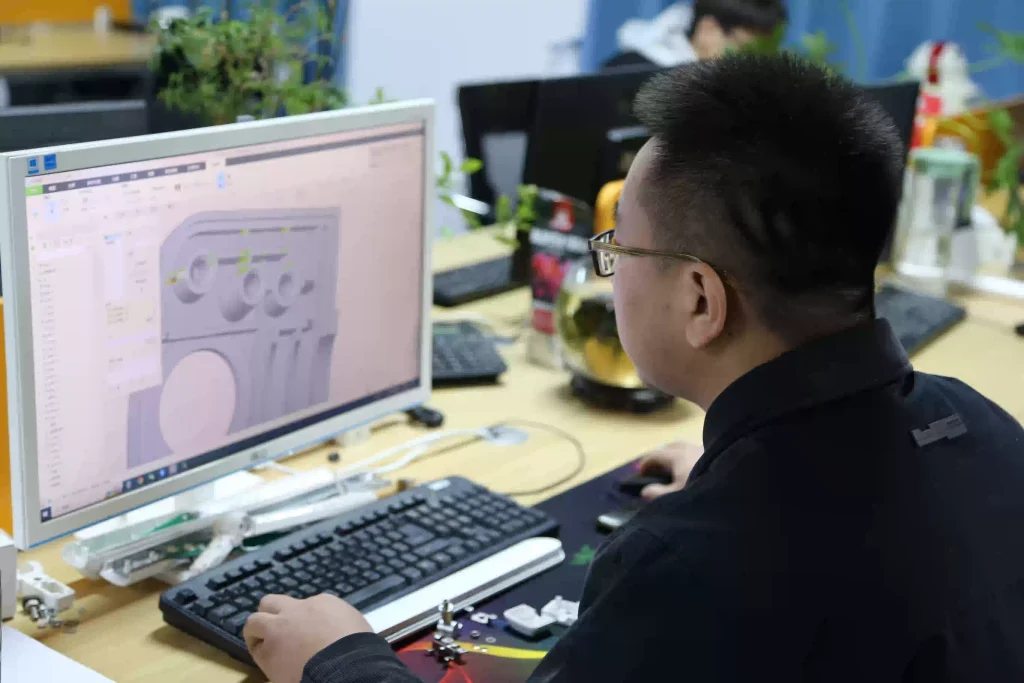
2. The Prototyping Mindset: Why 45 Days?
A 45-day UV lash light prototyping timeline is achievable for a focused OEM team with:
In-house R&D and industrial design capability
Established relationships with component suppliers (LED chip manufacturers, PCB fabricators)
In-house CNC and 3D printing for rapid iteration
Dedicated project management to keep each phase on track
What does 45 days include? According to Seming’s prototyping approach, this timeline covers the full journey from initial concept briefing to delivery of a fully functional working prototype . The process is designed to validate a new UV lash light design before committing to mass production tooling.
As Seming’s OEM buying guide notes, buyers should start with three fundamental decisions before prototyping begins : what salon workflow will the lamp support, what specifications and documents must your supplier prove, and what OEM, packaging, sample, and quotation details do you need before approval.
Discover UV lash light OEM solutions with rapid prototyping support.
3. Phase 1: Concept Briefing (Days 1-3)
The first phase of any 45-day UV lash light prototyping project is about clarity—not engineering.
What Happens Here
The supplier’s product team works with you to define the project scope. This is where the Technical Requirements Document (TRD) is created. As Seming’s OEM buying guide advises, the goal is to answer four key questions :
What salon workflow will the lamp support?
What specifications and documents must the supplier prove?
What OEM, packaging, sample, and quotation details do you need?
What is your target market and target price?
Why This Phase Matters
Most prototyping delays happen because the concept briefing is rushed. If you cannot articulate which UV Lash light format you need (tweezer, clamp, desktop, cordless) or what is your preferred control method (manual switch, foot pedal, wireless) , your supplier cannot build a design that fits your use case.
Decisions You Need to Make
| Decision | Options | Warum das wichtig ist |
|---|---|---|
| Lamp format | Tweezer-mount, clamp-on, desktop, floor stand | Affects workflow, training, packaging, and market positioning |
| Control method | Manual switch, foot pedal, wireless, timer | Impacts technician ergonomics and repeatability |
| Target price | Budget, mid-tier, premium | Determines component choices (LED quality, housing material) |
| Target market | Japan, Europe, North America, other | Determines certification requirements (CE, RoHS, FCC, IEC 62471) |
| Branding requirements | Logo, packaging, manual language | Determines OEM/private-label scope |
| Required quantity | Trial batch, first production run | Determines MOQ feasibility and pricing |
By the end of Phase 1, the supplier should provide a clear project timeline, cost estimate, and technical feasibility assessment for the 45-day UV lash light prototyping process.
For a deeper dive on supplier evaluation, see our B2B supplier KPIs guide later in this series.
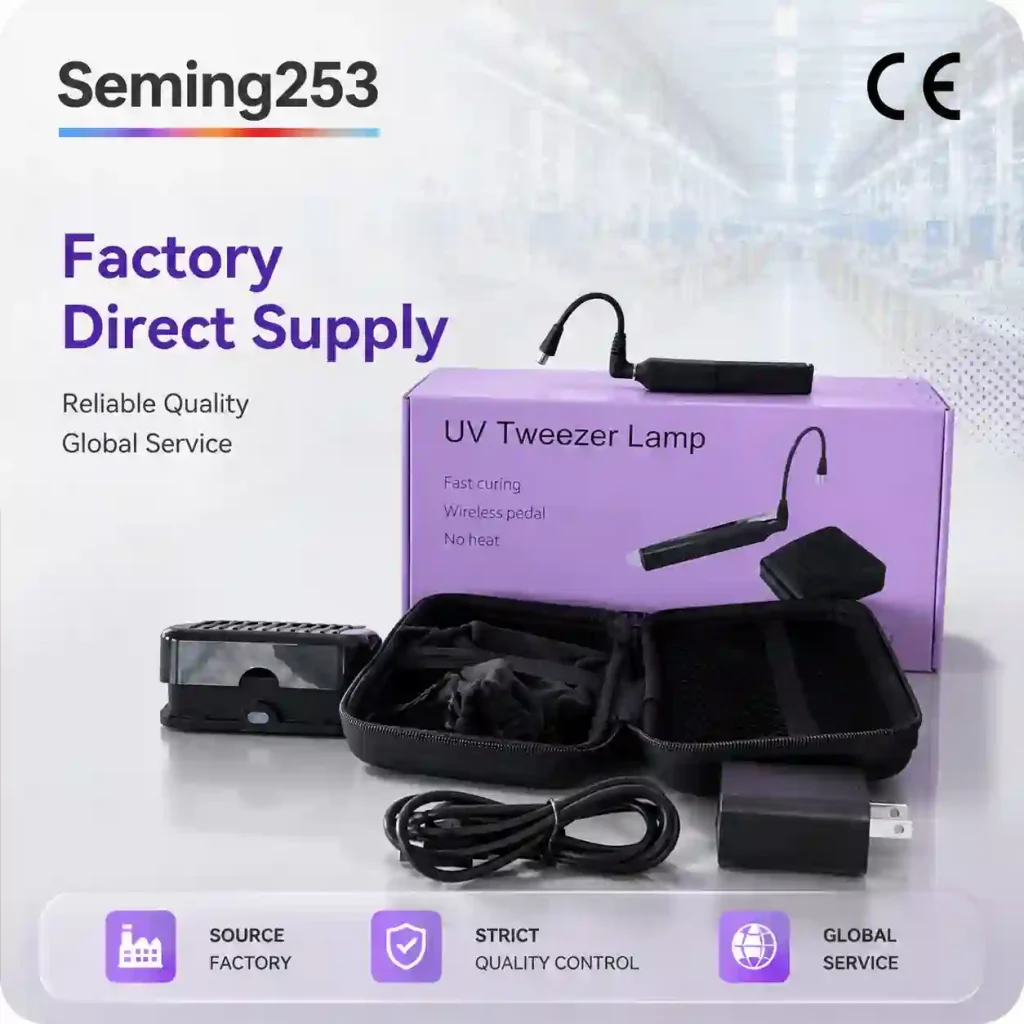
4. Phase 2: Industrial Design and 3D Modeling (Days 4-15)
Once the concept is defined, the design phase begins. This is where your UV lash light goes from a description to a visual concept.
What Happens Here
The industrial design (ID) team creates 2-3 initial design directions. These may include:
Aesthetic variations: minimal, ergonomic, futuristic, classic
Ergonomic considerations: weight distribution, grip comfort, switch placement
Material proposals: matte finish, gloss finish, soft-touch surfaces
Concurrent engineering is used at this stage. The ID team works alongside mechanical engineers to ensure the visual design can actually be manufactured . The goal is to catch “manufacturability issues” before anything goes to production. For example, a design that looks sleek on screen may be impossible to injection mold without expensive modifications. Catching this early saves time and tooling costs.
The Deliverable
By the end of Phase 2, you should receive:
3D CAD files (STEP/IGES format) showing the external design
Rendered images from multiple angles
Cross-section views showing internal component placement
Was ist zu prüfen?
According to Seming’s OEM buying guide, the questions to ask your supplier at this stage are: “Can you apply the logo to the product body, control unit, packaging, manual, or accessories? Which colors or surface finishes are available for the current model?” These questions ensure your branding requirements are feasible before engineering begins in earnest.
A professional 3D model at this stage enables you to make design decisions without cutting metal. This is where 45-day UV lash light prototyping projects either stay on track or derail—so invest time here.
Explore UV lash light wholesale options with customizable design.
5. Phase 3: Engineering and Component Selection (Days 10-20)
While the engineering team finalizes the industrial design, they begin specifying the internal components—the “hardware black box” that determines whether your UV lash light actually works.
What Happens Here
The engineering team selects and sources critical components:
| Komponente | Warum das wichtig ist | What to Verify |
|---|---|---|
| LED chip | Determines wavelength accuracy and stability | Grade-A chips from reputable suppliers like Nichia or Seoul Semiconductor |
| PCB/driver | Determines power stability and flicker-free output | Constant-current driver, no PWM flicker |
| Optical lens | Determines beam focus vs. diffuse scatter | Tight spot for lash-line focus |
| Housing material | Determines durability and heat dissipation | Aluminum heat sink vs. plastic-only housing |
| Battery (cordless models) | Determines runtime and charging experience | Capacity, charging time, replacement availability |
Component Quality: The Make-or-Break Decision
As Seming‘s CEO Jim Jiang explains in the OEM engineering guide, cheap public-mold lamps use the cheapest LED diodes available. These diodes suffer from poor energy conversion efficiency—when you pump power into them, they generate massive amounts of wasted heat. The glue might harden quickly, but uncontrolled thermal energy blasts the client’s eyelid, causing heat spikes and discomfort .
Furthermore, cheap diodes degrade rapidly . UV photoinitiators in professional lash adhesive react specifically to a narrow wavelength (typically 395nm). When cheap LEDs are exposed to the on-and-off cycling of a busy salon day, their semiconductor materials break down. The wavelength shifts down to 385nm, causing partial curing—a “shell cure” where the adhesive hardens on the surface but remains liquid inside .
This is where true OEM engineering adds value. A legitimate manufacturer customizes the spectral output—locking in the exact specifications of the LED chip to ensure absolute wavelength stability and zero lumen depreciation . When you can guarantee that the lamp emits the same pure 395nm light on its 50,000th use as it did on day one, you protect your clients from heat spikes and your brand from retention failures.
For a complete technical specification breakdown, see our UV lash light technical specs guide.
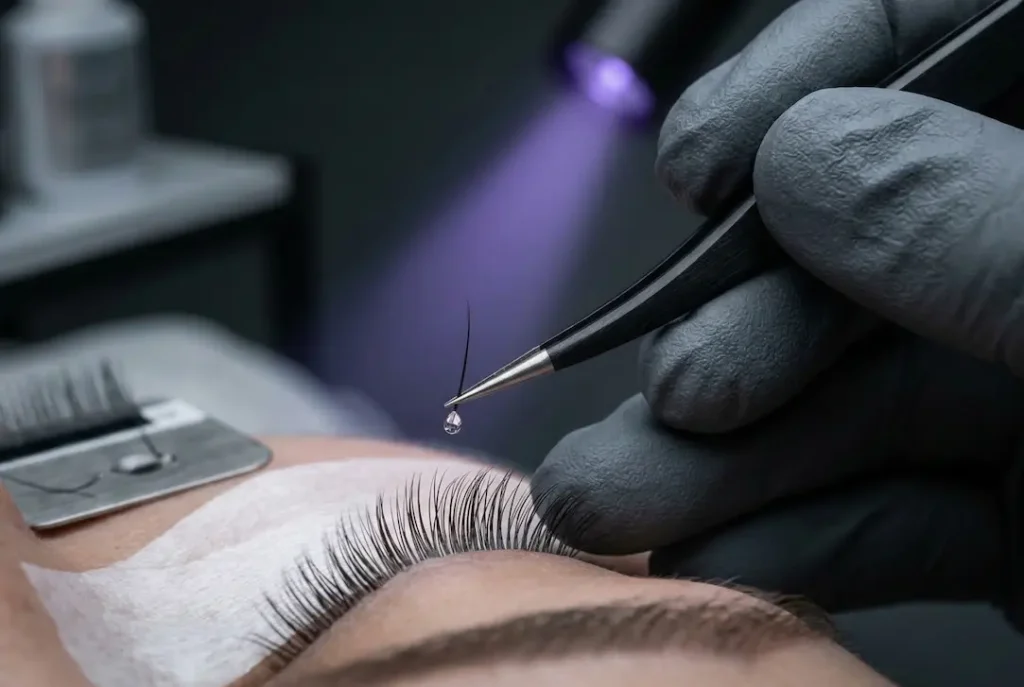
6. Phase 4: Rapid Prototyping (Days 16-30)
With engineering and design finalized, the first physical prototypes are produced. This is where your UV lash light becomes a tangible object.
What Happens Here
Two parallel prototyping processes run simultaneously:
Housing prototype (days 16-22): Using SLA or SLS 3D printing, the external shell is produced. This allows you to hold the product, check ergonomics, and validate the size and feel before steel molds are cut.
Functional prototype (days 20-30): A custom PCB is fabricated, and the LED array is assembled. This prototype includes the actual electronic components and tests:
Wavelength accuracy (spectral analysis)
Irradiance at working distance
Beam focus and distribution
Thermal management (heat testing)
Battery life (cordless models)
The Cost of Rapid Prototyping
The prototyping phase incurs costs for PCB fabrication, custom 3D printing, and component sampling. Top suppliers typically deliver first prototypes within 7–10 business days of design sign-off . The investment in rapid prototyping is far lower than the cost of fixing a design error after tooling is cut.
What to Test
When your prototype arrives, test it in real conditions :
Does the beam stay focused at the working distance?
Does the foot pedal respond immediately?
Does the lamp generate excessive heat after 30 minutes of use?
Is the housing comfortable to hold and position?
According to Seming’s OEM buying guide, you should request sample approval and final pre-production confirmation before mass production begins . This ensures the working prototype matches your requirements before tooling is committed.
Browse professional UV lash curing lamps with rigorous engineering standards.
7. Phase 5: Testing, Iteration, and Optimization (Days 31-40)
With the prototype in hand, the testing and iteration cycle begins. This phase is where the 45-day UV lash light prototyping process distinguishes serious manufacturers from low-end assemblers.
What Happens Here
The prototype undergoes comprehensive testing:
| Test Type | What It Measures | Passing Criteria |
|---|---|---|
| Spectral analysis | Wavelength accuracy at working distance | ±5nm tolerance from spec |
| Thermal imaging | Heat buildup during continuous use | <40°C surface temperature |
| Irradiance test | UV power at 3-5 cm distance | 200-500 mW/cm² minimum |
| Stress testing | Drop, flex, button endurance | 10,000+ button presses |
| Flicker test | Driver stability | No visible flicker (phone camera test) |
| Battery test (cordless) | Runtime and charge cycle | 2+ days of typical use |
Common Design Adjustments
Ergonomic feedback: “The switch is hard to reach during lashing.” → Reposition switch
Optical performance: “The beam is too wide—it scatters UV.” → Adjust lens or reflector
Wärmeableitung: “The housing gets warm after 20 minutes.” → Upgrade heat sink or add ventilation
Surface finish: “The plastic feels cheap.” → Upgrade to soft-touch or matte finish
Iteration Cycles
The best OEM partners allow 1-2 rounds of iteration within the 45-day timeline . Each iteration requires updating 3D models, re-printing housings, and re-assembling functional prototypes. A transparent supplier will charge for additional engineering cycles beyond the initial scope.
The goal is simple: by the end of Phase 5, the prototype is fully validated and ready for production tooling.
Explore UV lash lights with IEC 62471 safety certification for professional use.

8. Phase 6: Production Readiness (Days 41-45)
The final phase transitions the validated design to mass production.
What Happens Here
Design for Manufacturing (DFM) review: The production team reviews the design to ensure it can be manufactured consistently at scale. This includes checking mold design, assembly line requirements, and quality control checkpoints.
BOM finalization: The Bill of Materials is locked, including approved suppliers for each component.
Assembly instructions: The production team finalizes assembly procedures, ensuring consistent build quality across units.
Packaging design: Custom retail boxes, inserts, and user manuals are produced in final format.
As Seming’s lash light manufacturing overview notes, the company manufactures all products under ISO-certified processes and complies with CE, RoHS, and IEC/EN 62471 safety standards. The company must finalize this compliance documentation during Phase 6 for customs clearance and market entry.
The Delivery
At the end of Phase 6, you receive:
A fully functional, production-ready prototype
Complete technical documentation (specs, test reports, certifications)
Finalized BOM with component specifications
Packaging and branding samples
A production timeline for first batch delivery
9. Endgültiges Urteil
| Phase | Timeline | Key Deliverable | Buyer‘s Role |
|---|---|---|---|
| 1. Concept briefing | Days 1-3 | TRD and project scope | Define requirements, target price, market |
| 2. Industrial design | Days 4-15 | 3D CAD and renders | Review and approve design direction |
| 3. Engineering | Days 10-20 | Component specs, BOM draft | Verify component quality and certifications |
| 4. Rapid prototyping | Days 16-30 | Functional and cosmetic prototypes | Test in real conditions |
| 5. Testing & iteration | Days 31-40 | Validated prototype | Approve design changes |
| 6. Production readiness | Days 41-45 | Production-ready prototype, documentation | Final approval for tooling |
A 45-day UV lash light prototyping process is achievable with the right OEM partner. The timeline is ambitious but realistic—provided you have a supplier with in-house R&D, component sourcing capability, and rapid prototyping facilities.
The key takeaway? Prototyping is not about finding a cheap supplier. It is about finding an engineering partner who can translate your vision into a reliable, safe, and brand-differentiating product. As Seming‘s OEM engineering guide concludes, “Stop gambling your brand equity on generic public molds. Build a proprietary UV lash system that your customers will trust, respect, and reorder for years to come” .
Eine Notiz von Seminglight – Wir stellen professionelle UV-Wimpernleuchten with 395nm wavelength precision, IEC 62471 safety certification, and rapid prototyping support. Entdecken Sie unsere UV-Wimpernkollektion oder kontaktieren Sie uns for OEM consultation and prototyping quotes.
Jim Jiang

Gründer von Seming, leitender Produktdesigner mit 20 Jahren Erfahrung. Spezialisiert auf Anpassung, Innovation und Beleuchtungslösungen für Fotografie, Beauty-Beleuchtung und Beauty-Tools und mehr.