









1. The Negotiation That Cost Me $3,000
My first serious negotiation with a UV lash light supplier is still fresh in my memory. I’d done my homework, knew the market price, and felt confident about securing a good deal.
Starting with a low offer—20 percent below their quote—I expected some pushback. The supplier came back with a modest discount, so I pressed for more. They gave a little extra, and I pushed again. Then they went silent for two days.
When they finally responded, they accepted my price—but had quietly downgraded the LED chip quality to offset the difference. That fact didn’t surface until three months later, when my customers began complaining about inconsistent curing.
In the end, I saved $3,000 on that order—and lost $12,000 in returns, replacements, and damaged client trust.
That’s when I learned: negotiation isn’t about winning the price battle. It‘s about creating a deal that works for both sides.
This guide covers what I’ve learned about negotiating with UV lash light suppliers—how to prepare, what levers to use, and how to protect your quality without overpaying.

2. The Rules of Negotiation
Before we get into tactics, let‘s establish the principles that should guide every negotiation.
2.1 Know Your BATNA
BATNA stands for Best Alternative to a Negotiated Agreement. It’s your fallback if the negotiation fails.
For UV lash light sourcing, your BATNA might be:
A backup supplier you’ve already vetted
Delaying the order until you find a better option
Reducing your order quantity to work with a different supplier
Why this matters: When you have a strong BATNA, you negotiate from a position of strength. When you don‘t, the supplier knows you have no other options—and they’ll hold firm.
Procurement experts note that you should always “define your BATNA before you start negotiating.” Having a clear Plan B prevents you from accepting a bad deal out of desperation.
2.2 Negotiate Total Cost, Not Unit Price
Unit price is only one part of the equation. A $2 lower unit price is meaningless if the supplier delivers late, has poor quality, or hides additional fees.
Total cost includes:
Unit price
Tooling and setup fees
Packaging costs
Shipping and logistics
Customs and duties
Quality control costs
Warranty and returns
Reorder reliability
A higher unit price with a reliable supplier is often cheaper than a lower unit price with a supplier who causes delays and defects.
2.3 Build Leverage Before You Negotiate
Leverage is what gives you negotiating power. Common sources of leverage include:
Volume: Larger orders = more leverage
Competition: Showing you have other quotes = more leverage
Timing: Ordering during off-peak seasons = more leverage
Relationship: Being easy to work with = less friction
According to procurement best practices, suppliers that develop prototype products with buyers tend to share technology roadmaps and anticipate future orders—creating a strategic relationship that benefits both sides.
We offer transparent pricing and flexible terms for UV lash light buyers.
3. Price Negotiation Strategies
Price is the first thing most buyers ask about. Here’s how to approach it effectively.
3.1 Know the Cost Structure
To negotiate price, you need to understand what goes into it.
For a typical UV lash light, costs break down roughly as:
| Cost Component | % of Total |
|---|---|
| LED chips | 15-25% |
| PCB and electronics | 10-15% |
| Housing and materials | 15-20% |
| Assembly labor | 10-15% |
| Testing and QC | 5-10% |
| Overhead and profit | 15-25% |
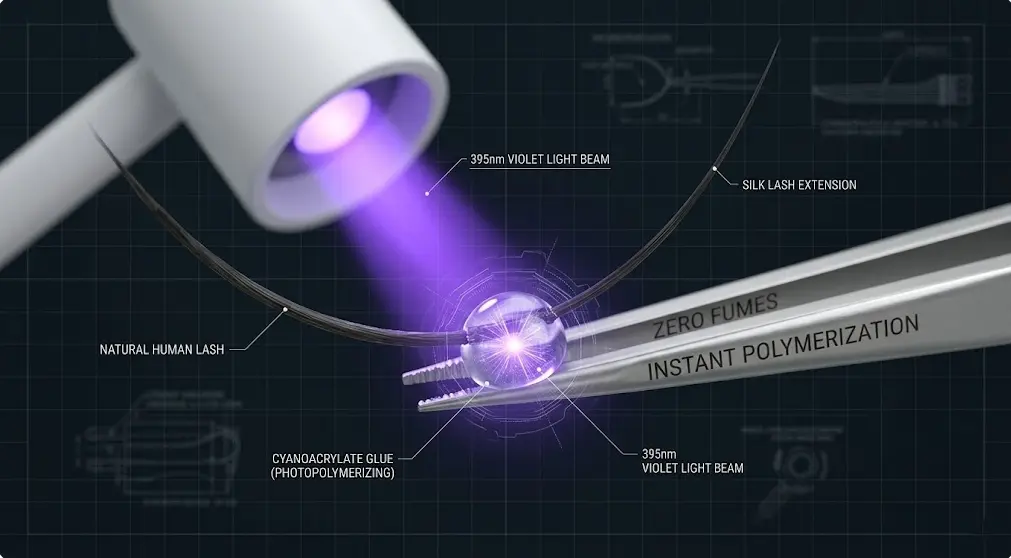
Understanding this helps you identify where there’s room to negotiate. For example, if you know the LED chips are a major cost, you might ask about alternative chip suppliers. If you know assembly is a fixed cost, you know the supplier has less flexibility there.
3.2 How to Approach Price
Start with a fair offer. Lowballing damages trust and invites countermoves like quality reduction. Instead, present your price expectation based on market data and your budget.
Ask about volume tiers. Price almost always decreases with volume. Ask for the price at 100, 300, 500, and 1,000 units. This shows the supplier you’re thinking about long-term growth.
Offer payment improvements. If you can’t get the price lower, offer something else: faster payment, larger initial deposit, or a longer-term commitment. These concessions can unlock price reductions.
Understand pricing dependencies. Alibaba marketplace data shows that pricing varies significantly based on wattage, customization depth, design complexity, and MOQ. Lower-priced options often have minimal MOQ requirements and standard configurations, while premium units command higher prices due to advanced features, finishing, and engineering.
According to a sourcing guide, when suppliers know you will inspect and test every batch, they are less likely to cut corners on quality to meet a lower price point.
3.3 Red Flag: Price Too Good to Be True
If a supplier offers a price significantly below market average—say, $10 per unit when the typical range is $15-25—be suspicious.
A price that’s too low usually means:
They’re using substandard LED chips
They’re skipping QC steps
They’re a trading company with no quality control
They’re planning to raise the price after you’re locked in
The UV lash light market is competitive, but there are no miracles. Paying a fair price for reliable quality is cheaper than paying a low price for unreliable products.
4. Payment Term Negotiation
Payment terms are where many buyers lose leverage. Here’s how to approach them.
4.1 Standard Terms
The standard payment structure for Chinese manufacturers is:
30% deposit before production begins
70% balance before shipment (after final inspection)
For new supplier relationships, this is the norm. Don‘t expect better terms until you’ve built trust.
4.2 When to Ask for Better Terms
After you‘ve placed a few orders and paid on time, you can ask for:
20% deposit / 80% before shipment
30% deposit / 50% before shipment / 20% after arrival
Extended payment terms (30-60 days after shipment)
Good payment history is one of the most valuable things you can bring to a negotiation. When suppliers trust you to pay on time, they become more flexible on terms.
4.3 Payment Red Flags
100% upfront: Unless you have a long relationship, this is a red flag
Payment to personal account: Disqualify immediately
No clear payment schedule: Request one
Wire transfer only: Ask about other options
According to the HUIMAIN negotiation guide, “when a supplier demands 100% upfront—especially via wire transfer to a personal account—that‘s a major red flag.” The standard is 30% deposit, 70% before shipment.
4.4 Protecting Your Deposit
If you‘re paying a deposit, make sure you have protection:
Request a proforma invoice that matches the purchase agreement
Ask for a formal purchase order with the same terms
Ensure the deposit is to a company account, not a personal account
Consider using a letter of credit for larger orders
The deposit is your only leverage until production is complete. Protect it.
We offer flexible payment terms for qualified UV lash light buyers.
5. Quality and Specification Negotiation
Price and payment terms are important—but quality is non-negotiable.
5.1 Define Quality Before You Negotiate
You can‘t negotiate quality after the fact. The time to define quality standards is before you sign the contract.
Specify in your purchase agreement:
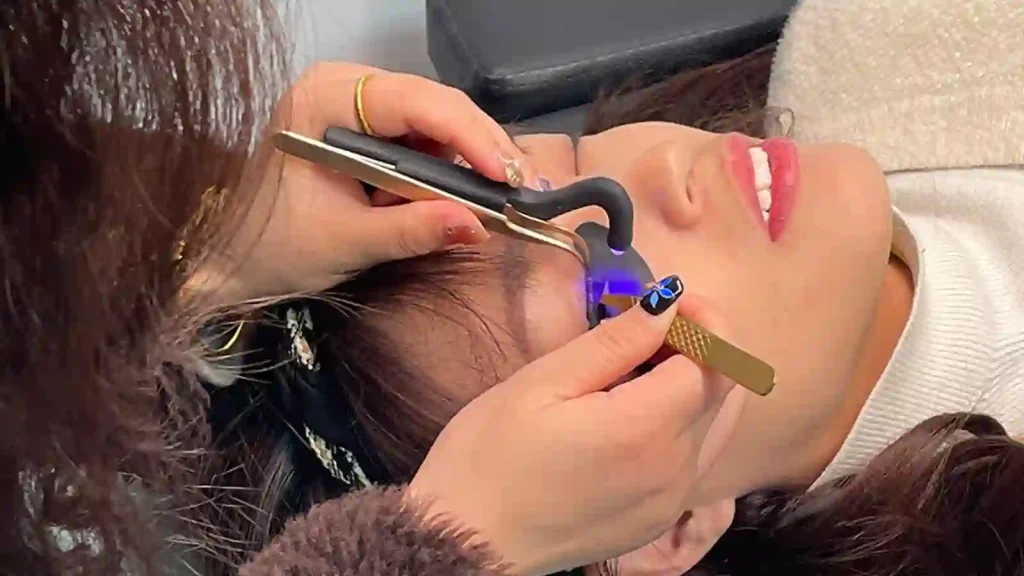
| Quality Parameter | What to Specify |
|---|---|
| Wavelength | 395nm ±5nm |
| Wavelength stability | ≤10nm drift over 1,000 hours |
| Irradiance at working distance | ≥200 mW/cm² at 3-5 cm |
| Certifications | IEC 62471, CE, RoHS, FCC |
| Visual inspection | No scratches, uniform finish, correct logo placement |
| Functional testing | 100% of units tested before shipment |
| Warranty | 12 months minimum |
5.2 How to Negotiate Quality
Quality isn‘t usually negotiable in the sense of “we want lower quality for a lower price.” Instead, frame it as “we need these standards met at this price point.”
If a supplier says they can’t meet your quality standards at your target price, ask:
“What component substitution can you suggest to reach the price?”
“How could we modify the specification to reduce cost?”
“What would the price be if we increased order volume?”
A good supplier will work with you on alternatives. A bad supplier will just agree to your specs and cut corners.
5.3 The Pre-Shipment Inspection
Make sure your purchase agreement includes a pre-shipment inspection (PSI) clause. This gives you the right to inspect the goods before shipment and reject any units that don‘t meet specification.
According to beauty equipment procurement guides, buyers should “conduct physical or video inspections before paying the balance.”
For large orders (500+ units), consider hiring a third-party inspection company like SGS or TUV to inspect the batch. It costs $200-500 and can save you from receiving a defective shipment.
For a complete incoming inspection checklist, see our first batch inspection guide later in this series.
6. Delivery and Lead Time Negotiation
Lead time affects your inventory planning, cash flow, and customer satisfaction. Here‘s how to negotiate it.
6.1 Know What‘s Realistic
| Order Type | Typical Lead Time | Negotiable? |
|---|---|---|
| Sample order | 7-10 days | No |
| Stock product (no branding) | 7-14 days | Slightly |
| Private label (logo + packaging) | 15-20 days | Yes |
| Custom design/OEM | 25-40 days | Yes |
6.2 How to Negotiate Lead Time
Plan ahead. Giving the supplier more lead time is one of the easiest ways to negotiate lower prices or better terms.
Ask for flexibility. Instead of a fixed date, ask for a range: “Between week 4 and week 6.”
Offer trade-offs. If you need faster delivery, offer something in return: a larger order, faster payment, or a longer commitment.
6.3 The Lead Time Trap
The supplier says they can deliver in 14 days. You agree. The order arrives in 18 days.
This happens frequently. To manage expectations:
Build buffer time into your planning
Ask the supplier how long they typically need between the deposit and sample approval
Include liquidated damages in your contract
A good supplier will be realistic about lead times. A bad supplier will overpromise and underdeliver.
7. The Art of the Trade-Off
Negotiation isn‘t about winning every point. It’s about creating a deal that works for both sides.
7.1 Common Trade-Offs
| Benefit | Why It Matters for Makeup Artists |
|---|---|
| Even, shadow-free light | No unwanted shadows on client’s face during application |
| True color rendering (CRI 90+) | Foundation shades appear accurate |
| Ring-shaped catchlight | Eyes look vibrant in content and photos |
| Adjustable brightness & color temp | Adapts to different skin tones |

7.2 Know Your Walkaway Point
Before any negotiation, decide what you’re willing to accept and what you‘re not. Know your walkaway point for:
Unit price
Lead time
Payment terms
Quality standards
When a supplier won’t meet your minimum requirements, it‘s time to walk away. Walking away is not failure—it’s protecting your business.
7.3 Negotiating With Multiple Suppliers
The best leverage in any negotiation is competition. If you have quotes from three suppliers, you can compare offers. If you only have one, you‘re negotiating from a weak position.
However, don’t just use quotes as leverage. Some buyers push this too far by taking one supplier‘s quote to another and demanding they match it without context. A professional approach is to be transparent about your budget and requirements. The suppliers will tell you what’s possible.
When you‘re ready to place your order, explore our UV lash light collection.
8. Final Verdict
| Key Takeaway | Action |
|---|---|
| Know your BATNA | Have a backup supplier before you start negotiating |
| Negotiate total cost | Unit price is only one factor |
| Define quality upfront | Specify standards in the purchase agreement |
| Get it in writing | All terms should be documented before production starts |
| Build relationships | Long-term trust unlocks better terms |
| Know when to walk away | Protect your business from bad deals |
Negotiation is not about squeezing every dollar out of a supplier. It‘s about creating a deal that both sides can live with. A supplier who feels squeezed will find ways to make up the difference—often in ways that damage your business.
I learned this lesson the hard way, when I saved $3,000 on unit price and lost $12,000 on returns. Don’t make the same mistake.
When you negotiate with a UV lash light supplier:
Prepare. Know your alternatives, your costs, and your walkaway point.
Be fair. A good deal is one where both sides win.
Get it in writing. Document all terms before production starts.
Build relationships. Long-term trust is more valuable than short-term savings.
A good negotiation doesn‘t end with a signed contract. It ends with a supplier who wants to work with you again.
A note from Seminglight – We offer competitive pricing, flexible payment terms, and transparent quality standards for UV lash light buyers. UV lash lights with fair terms and reliable quality. Explore our UV lash collection or contact us to discuss your requirements.
Jim Jiang

Founder of Seming, Chief Product Designer with 20 years of experience. Specializing in customization, innovation and lighting solutions for photography lighting, beauty lighting and beauty tools, and more.