









Introduction: The Clients Who Haunt Us (And Why They’re Our Greatest Teachers)
There are clients who haunt the thoughts of even the most seasoned lash artists.
It’s not about a difficult personality or an unrealistic expectation. It’s about the client for whom the standard rules of lashing simply don’t seem to apply. The client whose lashes defy logic, whose retention becomes a frustrating puzzle that can shake an artist’s confidence to its core.
Consider the story of ‘Sarah,’ a composite of countless experiences shared within the lashing community. She is lovely, friendly, and has a great set of natural lashes. The service itself goes off without a hitch. She leaves the studio with a gorgeous hybrid set, and the artist feels that familiar surge of pride. Two days later, the dreaded message arrives. “Hey! A bunch of my lashes have fallen out already.” The artist reassures her, suggesting it’s likely the natural shedding cycle. By day five, a picture confirms the worst. It looks like a three-week-old fill. An artist’s heart sinks.
They try again. A different “stronger” glue is used. The prep work becomes even more meticulous. The same thing happens. After a third attempt, the client politely says she’ll try somewhere else. For the artist, it’s not just the loss of a client; it’s a significant blow to their confidence. Weeks can be spent obsessing over it. Was it a bad batch of glue? Was the technique flawed? Is this career really the right fit?
This experience, in all its painful variations, is one of the most important turning points in any artist’s career. Sarah, and clients like her—the ones with oily skin, watery eyes, or twitchy lids—are not the “nightmare clients” we secretly dread. They are a masterclass in disguise. They are the gatekeepers to the next level of our skill, forcing us to move beyond basic application and become true, expert problem-solvers.
This isn’t another generic list of tips. This is a deep dive into the trenches. We’re going to open up the case files on three of the most challenging client types that artists universally face. Through their stories, we will diagnose the root cause of the problem and lay out a clear, actionable strategy to not just “manage” the situation, but to conquer it.
By the end of this guide, it will be clear that these clients aren’t here to break an artist’s spirit. They’re here to make them brilliant.
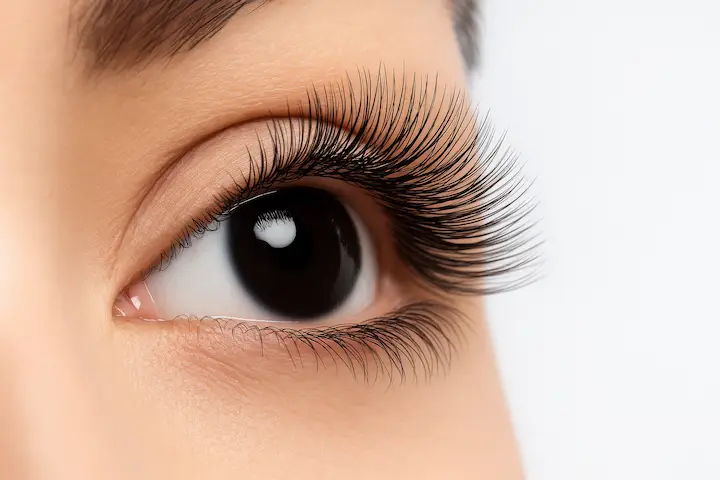
Case File #1: Olivia – “The Slider”
Client Profile:
First, let’s examine the case of ‘Olivia.’ She represents the kind of client every lash artist dreams of on paper. She’s always on time, she loves dramatic volume, and she pre-books her fills for the next six months. There’s just one problem: her lashes have a secret life. They seem to just… slide off.
Olivia is a personal trainer and a hot yoga enthusiast. She has that enviable, healthy glow. She follows aftercare instructions to the letter—oil-free everything, a silk pillowcase, the works. Yet, when she returns for her two-week fill, her retention is consistently around 20%. It’s frustrating for her and downright mystifying for the artist. For a long time, an artist in this situation might blame their adhesive, the humidity, the planets aligning—anything but the real culprit.
The Diagnosis: Unmasking the Invisible Enemy
The turning point in cases like Olivia’s comes during a consultation when the artist decides to stop looking at their lash tray and start truly analyzing the client’s physiology. A simple question can change everything: “Describe your skin on a typical day.”
“Oh, it’s pretty normal,” she might say, “but I do get shiny in my T-zone by the afternoon.”
Click. That is the first clue. While her cheeks might be normal, her T-zone, which includes the forehead, is producing excess sebum. And where does the oil from a shiny forehead go? Gravity pulls it straight down into the brow bone and, you guessed it, the lash line.
The second clue is that healthy “glow.” That dewy, radiant look is often a sign of well-hydrated skin with robust sebum production. For a makeup artist, it’s a dream canvas. For a lash artist using traditional cyanoacrylate adhesive, it’s a battlefield.
The Root Cause: This is a classic case of clinically oily skin. Even with perfect aftercare, the client’s body is producing the one thing that traditional lash glue fears most. Sebum is a natural oil, and it acts as a solvent. It doesn’t just sit on top of the bond; it’s insidious. It wicks down the natural lash and begins to slowly, methodically break down the porous structure of the cured adhesive from the base. The bond doesn’t break; it dissolves. That’s why the fans aren’t snapping off; they are sliding off intact.
The Comeback Strategy: A Three-Step Assault
Once the enemy is identified, a battle plan can be created. This is no longer just lashing; it’s engineering a solution.
Step 1: Declare War on Oil (The Pre-Treatment Protocol)
The first step is to create a surgically clean, oil-free surface for application. A standard, quick lash bath isn’t going to cut it. This situation calls for a multi-stage assault.
- The Double Cleanse: The process should start with a gentle, oil-free lash shampoo, focusing on massaging it deep into the base of the lash line to break up any surface oils. After rinsing, it’s done again. The first wash removes makeup and surface debris; the second wash addresses the oils on the skin and hair itself.
- The Saline Rinse: After the second cleanse, a regular water rinse should be abandoned. Instead, a sterile saline solution on a microfiber brush should be used for a final rinse of the lash line. Why? Saline is excellent at stripping away residual oils and cleansers without leaving any film behind. It creates an almost “squeaky clean” surface.
- Strategic Primer Use: For years, many have thought primer was the answer to everything. For oily clients, it can be a trap. Many primers have an alcohol base to strip oils, but they can also dehydrate the natural lash. An overly dehydrated lash can cause the cyanoacrylate to “shock cure,” leading to a brittle bond. Instead, a protein-based primer should be used sparingly, applied with a micro-brush only to the very base of the natural lashes. This provides a better surface for the adhesive to grip without compromising the integrity of the natural lash.
Step 2: Build a Better Fortress (Application Technique)
Next, the physical structure of the bond itself must be rethought. With an oily client, a simple “touch-and-go” attachment isn’t enough. The surface area of connection must be maximized.
This means focusing intensely on the “wrap.” When placing a fan, the goal is no longer to just attach it to the top or side of the natural lash. The goal is to use a slightly more generous (but not bulbous) amount of adhesive and, with a gentle rolling motion, encourage the base of the fan to hug and wrap around the natural lash. This creates a physical anchor, a mechanical lock that is much harder for oil to penetrate and weaken. It requires more patience and control, but the payoff is immense.
Step 3: Introduce the “Secret Weapon” (The Turning Point)
A better foundation and a stronger structure are in place, but there is still a weak link: the 24-48 hour curing period. During this time, the adhesive remains vulnerable. The client’s body will continue producing oils, which will immediately begin their assault on the still-hardening work.
This is where a game-changer is needed. This is the moment to introduce the SM247 Tweezer UV Lamp.
The way to explain this to a client is simple and powerful: “Traditional glue is like slow-drying cement. We pour it, and then we have to protect it from the rain for two days while it slowly hardens. The oil from your skin is like a constant, drizzling rain. But what if, instead of cement, we could use a high-tech epoxy that is instantly hardened with a targeted beam of light? What if we could ‘weld’ each lash into place?”
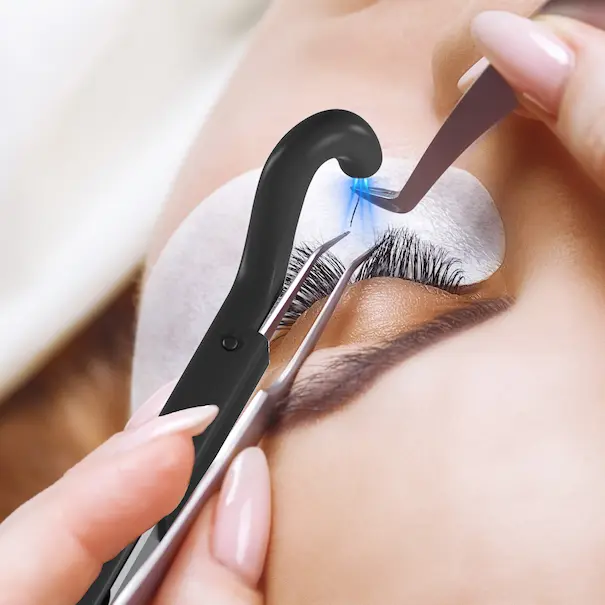
The UV curing system fundamentally changes the game for these clients. The focused beam of light from the SM247 Tweezer UV Lamp hits the adhesive base, the curing process is 100% complete. It forms a dense, non-porous, fully polymerized shell.
There is no longer a vulnerable window for oil to seep in. The bond is sealed, locked, and fortified before the body’s natural oils even have a chance to reach it. It’s like putting an invisible, waterproof, and oil-proof armor around every single attachment point.
The result? When a client like Olivia comes back for her next fill, her lashes are transformed. 70% retention becomes the new normal. The client is ecstatic. The artist is vindicated. This isn’t a workaround; it’s a permanent solution. The “problem” of oily skin becomes a non-issue.
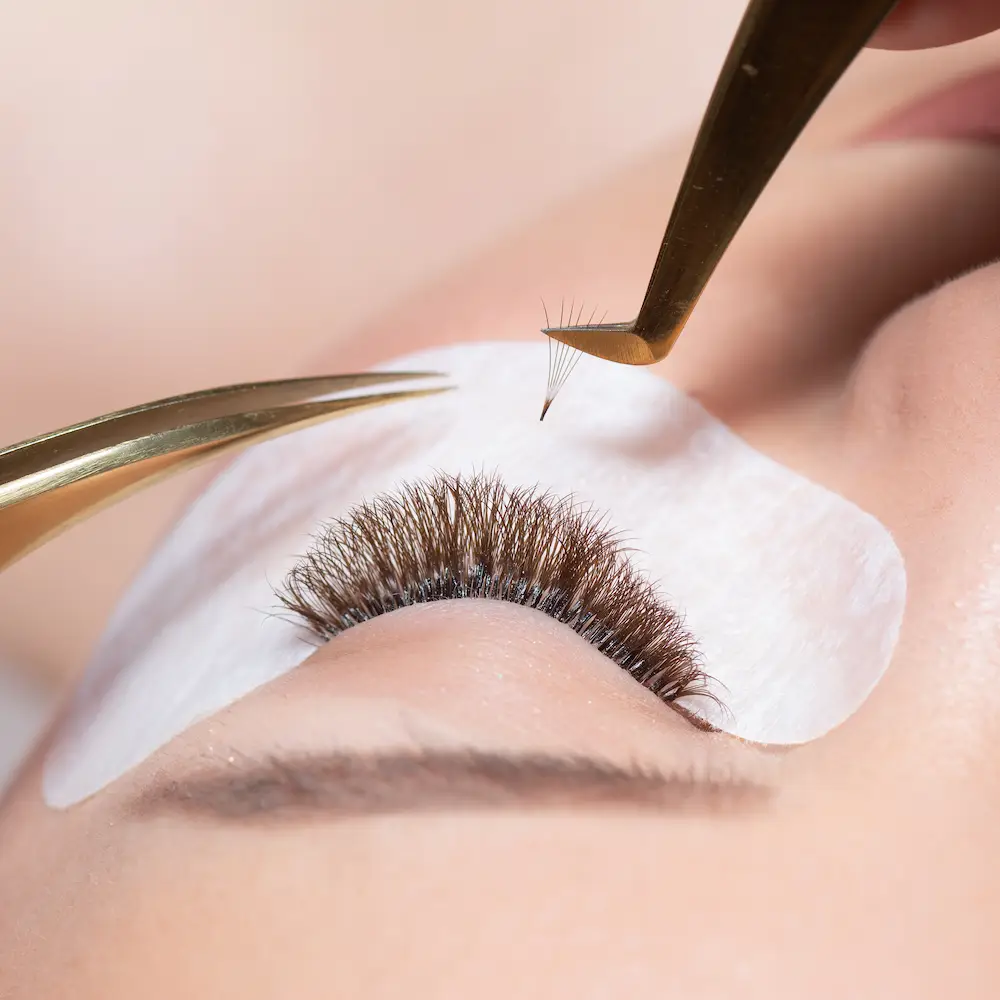
Case File #2: Wendy – “The Waterfall”
Client Profile:
Our next case study is ‘Wendy.’ She represents the sweet, soft-spoken client. She’s perfect in almost every way, except for one thing: her eyes are a waterfall. From the moment the first extension is placed, a slow, steady trickle of tears begins to well up in the corners of her eyes.
She’s not in pain. She’s not sad. She’s not allergic. Her body just has an extreme sensitivity to the process—the light, the fumes (no matter how low), the sensation of the tape. It’s a physiological response she can’t control.
For any lash artist, this is a heart-stopping scenario. Each teardrop is a tiny tidal wave of salt water, threatening to wash away hard work. A traditional adhesive bond that comes into contact with that much moisture before it’s cured is instantly compromised, resulting in that dreaded white “frosting” (shock curing) and zero adhesion.
The Diagnosis: The Uncontrollable Variable
With Wendy, the diagnosis is simple, but the problem is complex. We are dealing with hyper-sensitive, watery eyes. The challenge isn’t chemical (like oil) but mechanical and environmental. The workspace, no matter how controlled an artist tries to make it, is constantly being flooded.
Traditional methods become a frantic race against the clock. The artist works as fast as possible, constantly dabbing the corners of the eyes with a lint-free wipe, using a fan to try and dry the tears before they reach the lash line. It’s stressful for both artist and client. The work can become sloppy, the retention is terrible, and the appointments become a tense, frustrating ordeal.
The Gentle Revolution: A Strategy of Speed and Sanctuary
To solve Wendy’s case, a two-pronged approach is necessary. First, the artist must create the most soothing, non-reactive environment possible. Second, they need a technology that is faster than her tears.
Part 1: Creating a “Zen Zone”
- Taping Transformation: Plastic tape is often a mistake here. Switching to the softest foam tape available, cut to perfectly match the client’s eye shape, can make a world of difference. A “pull-away” taping technique, where the tape gently holds the lid without putting any pressure near the waterline, is also essential.
- Fume Management: Placing a small, activated charcoal pod near the glue stone helps absorb some of the cyanoacrylate fumes before they can travel up to the client’s eyes. The fan should no longer be pointed at the lashes to “dry” them, but positioned low and angled away, to gently pull fumes away from the face.
- Light Sensitivity: The overhead lamp should be turned down to its lowest comfortable setting, with the artist relying more on a focused headlamp for detail work. This reduces the overall light exposure to the closed eyes.
Part 2: A Technology That Conquers Tears
These comfort measures helped reduce the flow, but they didn’t stop it entirely. The real revolution for clients like Wendy came from changing the fundamental nature of the adhesive bond itself, moving from a vulnerable, slow process to a controlled, predictable one. This is where the SM247 Tweezer UV Lamp becomes essential.
The critical flaw of traditional glue in this scenario isn’t just its 24-hour full cure time, but the vulnerability of its initial bond. A “fast-drying” 1-second glue might feel tacky and hold the lash in place, but that bond is far from waterproof. It’s still a fragile, ongoing chemical reaction. A single teardrop at this stage can introduce a flood of moisture and salt, causing the bond to “shock cure” into a brittle, white mess with no real strength.
The UV system changes the entire game. It’s not about being “faster” in the sense of a quicker initial grab; it’s about achieving a complete, final, and waterproof cure in a very short and controlled window.
The workflow transforms from a frantic race into a calm, deliberate procedure:
- Isolate a natural lash.
- Pick up, dip, and perfectly place the fan. Take a moment to ensure the angle is flawless.
- Tap the touch switch to begin the controlled 2-3 second curing process with the SM247 lamp.
- During these few seconds, the artist can hold the extension perfectly steady, ensuring the bond forms without any interference.
- By the end of that 3-second window, the bond is 100% polymerized, fully sealed, and completely impervious to moisture.
The “magic” here isn’t a literal flash; it’s the power of certainty. The artist no longer has to pray for a dry moment. They can create one.
This had a profound impact on the appointments. The artist can work methodically, even on the tear-prone outer corners. If a tear begins to well up, it doesn’t matter. Any previously cured lashes are already invincible. The artist has a predictable 3-second window to create a perfect, waterproof bond before moving to the next lash.
The change in the appointment atmosphere is profound. The frantic energy vanishes. The artist is calm and in control. The client, sensing this calm, becomes more relaxed, which in turn often makes her eyes water less. For the first time, she can get a full, beautiful, and long-lasting set of lashes without the stress and disappointment. The problem is not just solved by being faster than tears, but by implementing a technology that makes the tears irrelevant.
Case File #3: Tina – “The Quake”
Client Profile:
Our final case file is on ‘Tina.’ She represents a force of nature. She’s a high-powered marketing executive who lives on espresso and deadlines. She lies on the lash bed, and even with her eyes closed, an energetic buzz radiates from her. And that energy manifests in one specific way: twitchy eyelids.
Her lids flutter, quiver, and occasionally jerk. It’s not dramatic, but it’s constant. For a lash artist trying to isolate a single, hair-thin lash and place an extension with sub-millimeter precision, it’s like trying to perform surgery during a minor earthquake.
Every placement is a gamble. The perfect fan is on the perfect natural lash, and just as the tweezers are about to release… twitch. The fan is now glued to three other lashes. The next minute is spent trying to fix it, frustration growing, appointment time slipping away.
The Diagnosis: The Overstimulated System
Tina’s issue is neurological, not physiological in the same way as oil or tears. It’s caused by an overstimulated nervous system. The primary culprits are usually:
- Caffeine: The number one cause.
- Stress and Lack of Sleep: High cortisol levels can lead to muscle spasms.
- Light Sensitivity: Even through closed lids, the bright overhead lamp can trigger fluttering.
The challenge here is one of pure mechanical interference. It sabotages precision, wastes time, and dramatically increases the risk of creating stickies, which are a cardinal sin of lashing.
The Art of “Fast, Precise, and Stable”
With Tina, the strategy must be focused on creating moments of stability within the chaos and dramatically shortening the time the work is vulnerable to her movements.
Part 1: Physical Soothing Methods
Before implementing advanced technology, artists often rely on a few clever tricks to calm twitchy lids.
- The Coin Trick: Placing a small, clean, weighted object, like a large coin or a jade stone, on the center of the eyelid can often help to calm the muscle spasms through gentle, steady pressure.
- Strategic Taping: Instead of just taping down the lower lashes, sensitive tape can be used to apply gentle, downward pressure on the upper lid itself, acting as a soft anchor to minimize fluttering.
- Verbal Cues: Learning to work with the client’s rhythm can help. A simple, “Okay, Tina, I’m about to place a lash, deep breath,” can sometimes create a precious two-second window of relative calm.
Part 2: Conquering Uncertainty with Tech
These tricks help, but they are still a workaround. The real breakthrough is in fundamentally changing the speed of the most critical part of the process: the bond formation.
This is where the SM247 Tweezer UV Lamp plays its final, crucial role.
The problem with traditional glue in this scenario is, again, the curing time. That 1-3 second window where the glue is still tacky and the fan is not yet secure is the “Danger Window.” During that window, any twitch can ruin the placement. An artist’s entire job becomes trying to minimize activity during that tiny window.
The UV system doesn’t just minimize the Danger Window; it practically eliminates it.
The instant cure means that the moment a fan is in the perfect position, a single tap of the pedal makes it permanent. The period of vulnerability is reduced from several seconds to a fraction of a second.Maybe you are worried about the UV damage to the eyes, but do’t worry, the SM247 tweezer UV lamp passed the test of photobiological safety of lamps and lamp systems (EN 62471), so won’t damge to your eyes.
The “earthquake” is still happening, but the “construction time” is now so fast that the structure can be built in the tiny moments of calm between the tremors.
This has a massive impact on the service:
- Efficiency Skyrockets: An artist is no longer spending 20% of their time fixing misplaced lashes. Appointments become faster and more predictable.
- Quality Improved: The number of stickies drops to virtually zero. The sets become cleaner and healthier for the client’s natural lashes.
- Client Comfort Increased: Because the process is faster and more efficient, the client doesn’t have to struggle to keep still for as long. They can relax more, which, ironically, can even help to reduce the twitching.
The twitchy eyelids aren’t “cured,” but a system is implemented that makes them irrelevant to the quality and outcome of the service. Technology is used to conquer uncertainty.
Conclusion: From Problem-Solver to Value-Creator
Olivia, Wendy, and Tina. The “oily one,” the “watery one,” and the “twitchy one.” They walk into studios everywhere as the biggest professional frustrations, the “nightmare clients.” They force artists to look beyond their tools and techniques and question the very foundations of how they work.
And in doing so, they give every artist the greatest gift they can ask for: a reason to evolve.
By shifting the mindset from a passive defender to an active architect, from compromising art to upholding it, and from giving limitations to granting freedom, solutions are found. And the common thread, the key that unlocks the solution for each of these unique challenges, is the ability to take absolute control over the adhesive bond through UV curing technology.
When an artist can confidently and consistently solve the most difficult problems in their field, something incredible happens. They stop being a commodity. They are no longer just another lash tech on a list, competing on price.
They become a specialist. An expert. The go-to artist for clients who have had problems everywhere else. Their value skyrockets, because they are not just selling a service; they are selling a solution, a result, and most importantly, peace of mind.
The confidence gained from knowing you can handle any client that walks through your door is the real prize. That confidence will radiate through your work, your marketing, and your pricing. It will transform your business.
So, the next time a client with oily skin, watery eyes, or twitchy lids books an appointment, don’t feel that familiar dread. Smile. Because you’re not looking at a problem. You’re looking at an opportunity to be brilliant.
Ready to turn your biggest challenges into your most loyal clients? It’s time to equip your studio with the tools that give you the ultimate control. Explore the precision and power of the SM247 Tweezer UV Lamp on seminglight.com and start your journey from anxious artist to fearless expert today.