









Informazioni sull'autore: Jim Jiang
Fondatore di Seming, Chief Product Designer con 20 anni di esperienza.
Specializzata nella personalizzazione, nell'innovazione e nelle soluzioni di illuminazione per la fotografia, l'illuminazione di bellezza, gli strumenti di bellezza e altro ancora.
Introduzione
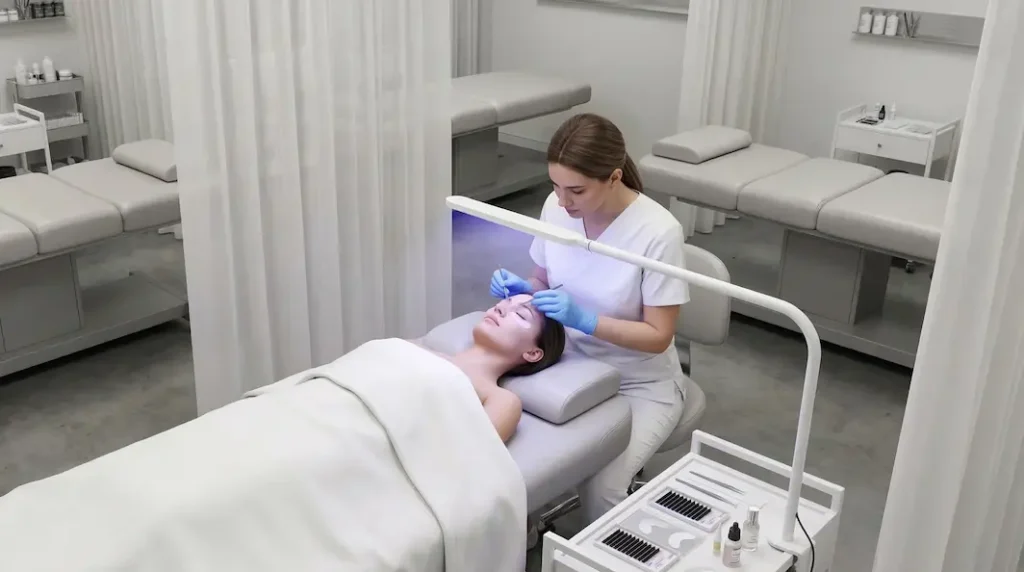
Currently,the lash industry is currently experiencing a technological gold rush. Specifically, UV curing systems have fundamentally changed how salons operate, promising faster application times, rock-solid retention, and drastically reduced allergic reactions by neutralizing cyanoacrylate fumes instantly.
However, with this massive boom comes a dangerous flood of white-label, public-mold “toys” disguised as professional equipment. Many overseas vendors are relying on exaggerated marketing buzzwords—boasting about massive wattages or slapping useless digital touchscreens on their devices—to distract buyers from their poor underlying engineering.
In 2026, these cheap alternatives heavily saturate the global supply chain. As a result, regional distributors and franchise directors, sourcing equipment based on flashy renders rather than hard data has led to skyrocketing Return Merchandise Authorization (RMA) rates. Salons are sending back broken lamps, and distributors are bleeding profit through after-sales support and damaged reputations.
Sourcing equipment is not about buying the flashiest gadget; it is about investing in a reliable production tool. Therefore, when a salon runs a device continuously for 8 hours a day, 6 days a week, the marketing hype fades, and only the physics, chemistry, and mechanics remain.
As a source manufacturer deeply entrenched in product design and assembly, we are pulling back the curtain. If you want to source a true Lampada UV commerciale per ciglia, you need to evaluate it like an engineer. Here are the three non-negotiable engineering specs you must look for specs you must look for in a professional UV lash lamp.
Spec 1: The Micro-Drop Reality (0.5s Cure is About Spectral Precision, Not Brute Force)
First, Let’s address the biggest controversy and marketing gimmick in the market today: the “0.5-second instant cure.”
The Engineering Reality of the Micro-Drop:
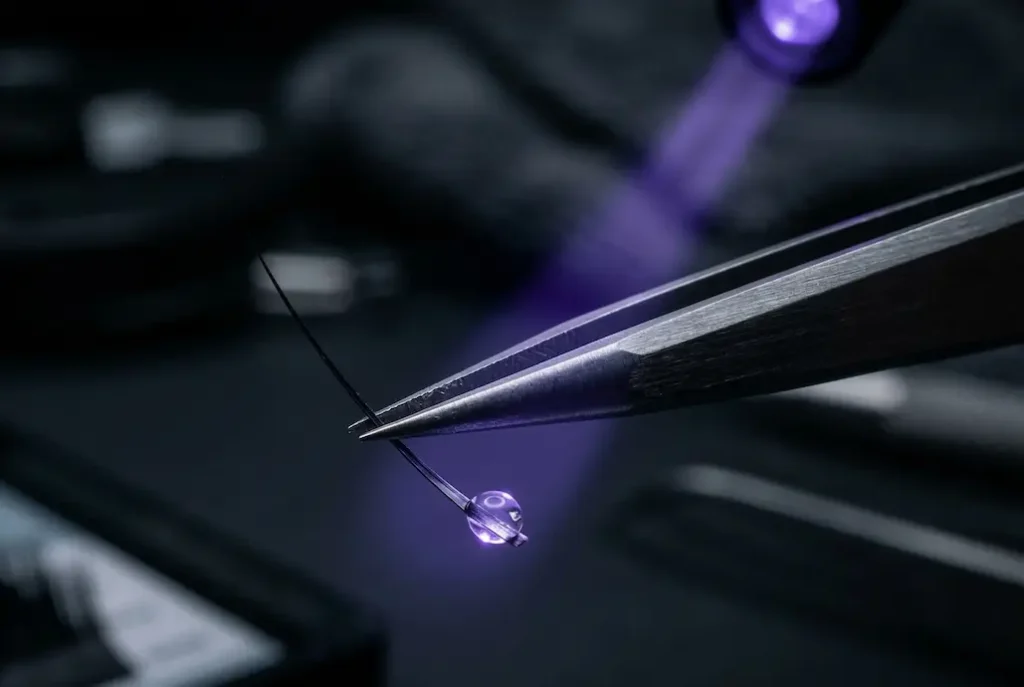
In the specific context of eyelash extensions, In the specific context of eyelash extensions, artists use a microscopic amount of cyanoacrylate adhesive. In fact, industry experts refer to it as a “micro-drop.” Because the volume and surface area of this liquid are so incredibly small, a genuine, high-purity UV light beam può easily penetrate and fully polymerize the adhesive in Da 0,5 a 1 secondo. This is a well-documented physical fact of photopolymerization at a micro-scale. It does not require alien technology; it requires pure light.
The Marketing Hype & The Thermal Risk:
The problem lies in how cheap manufacturers attempt to achieve this 0.5-second benchmark. Because they utilize low-tier LED diodes with terrible light conversion efficiency, they resort to a dangerous, brute-force method: blindly cranking up the electrical wattage. When you pump excessive wattage into a cheap LED, it does not just produce UV light; it produces a massive amount of wasted infrared heat. This creates a severe “Heat Spike.” While the glue might technically harden in 0.5 seconds, the uncontrolled thermal energy blasts the client’s delicate eyelid. This causes immediate discomfort, potential micro-burns, and can even damage the cuticle of the natural lash over time. Furthermore, this brute-force method fries the LED chip from the inside out. The heavily advertised “0.5-second cure” quickly degrades into a “3-second cure” after just a few months of commercial use.
The Seminglight Standard:
A true Commercial UV Lash Lamp achieves the 0.5 to 1-second cure through spectral purity and precise energy output, not brute heat. At Seminglight, our engineering focuses on eliminating wasted heat energy. We calibrate the light intensity to instantly cross-link the micro-drop of adhesive while remaining completely cold and imperceptible to the client’s skin. We provide the operational speed of an instant bond without the severe liability of thermal discomfort.
Spec 2: Wavelength Stability Over High Wattage (The Secret to Retention)
Next, If you look at typical B2B supplier catalogs, you will see a frantic race for higher numbers: “10W! 15W! 20W UV Power!” Unfortunately, marketing conditioning leads buyers to think bigger is always better.
The Hype of High Wattage:
Sellers want you to believe that a higher wattage automatically equals a better, stronger cure. From a chemical engineering standpoint, this is fundamentally false. Curing lash glue is not like microwaving food, you cannot just blast it with more power to make it finish faster.
The Engineering Reality of Photochemistry:
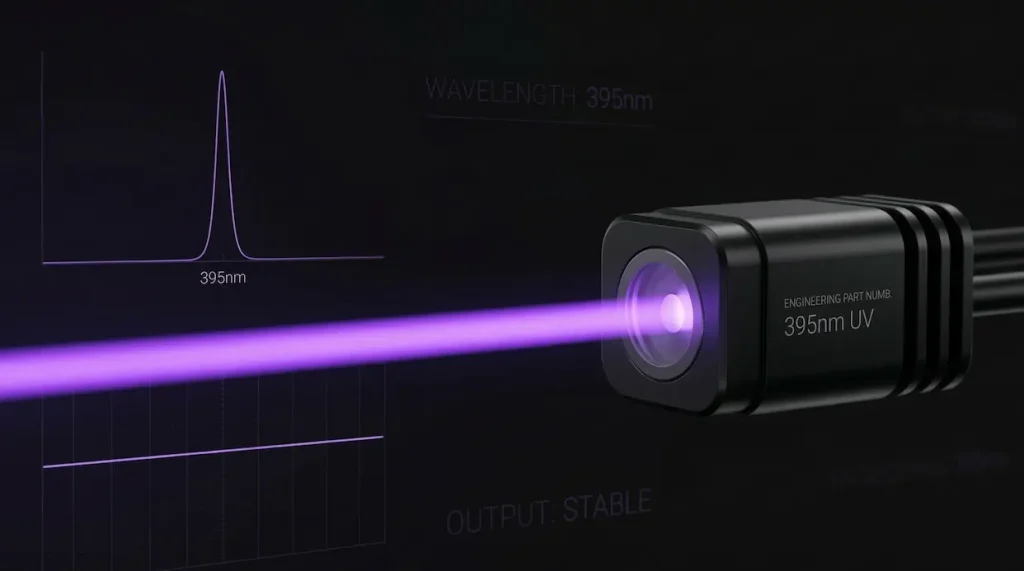
The photoinitiators inside UV lash glue are chemically formulated to react strictly to a very specific wavelength of light—typically precisely 395 nm.
The true test of a commercial-grade LED diode is not how bright it gets on day one. But its resistance to Lumen Depreciation e Wavelength Shift over its lifespan. When busy salons subject cheap LEDs to rigorous on-and-off cycling of a busy salon day (often triggered hundreds of times per appointment), the semiconductor materials degrade rapidly.
As the diode degrades, the wavelength it emits begins to drift. It might shift from 395nm down to 385nm or up to 405nm. Here is the critical failure: Even if the lamp is still pushing 20 watts of power, if the wavelength has shifted, the photoinitiators in the glue will only partially activate. This leads to what chemists call “shock curing” or a “gummy bond”—where the outside of the glue drop hardens into a shell, but the inside remains a volatile liquid.
The result? The client goes home, washes their face, and the extensions slide right off. Worse, the uncured liquid inside continues to emit cyanoacrylate fumes, triggering the exact allergic reactions the UV system was supposed to prevent.
The Seminglight Standard:
We engineer our systems for absolute output stability. Our core B2B metric is ensuring that on the 50,000th pedal click, the LED diode emits the exact same pure 395nm wavelength as it did on the very first click. A commercial lamp protects your salon’s retention rates—and your distributor’s reputation—by ensuring the chemical reaction is mathematically perfect every single time.
Spec 3: The Mechanics of Reliability: Damping, Stability, and Switches
We have covered the invisible elements—chemistry and light spectrums. But what about the physical hardware? In a high-traffic commercial salon environment, the first things to fail are always the moving mechanical parts.
The Hype of “Smart” Features:
Many manufacturers love to add Bluetooth connectivity, digital LCD displays, and complex control panels to make the lamp look “smart” and justify a higher price tag. Meanwhile, they entirely neglect the physical hardware that the lash artist actually interacts with physically hundreds of times a day.
The Engineering Reality of Salon Operations:
A master lash artist relies entirely on muscle memory and a seamless state of “flow.” If the physical mechanics of the lamp fail, the entire appointment is derailed, and throughput plummets.
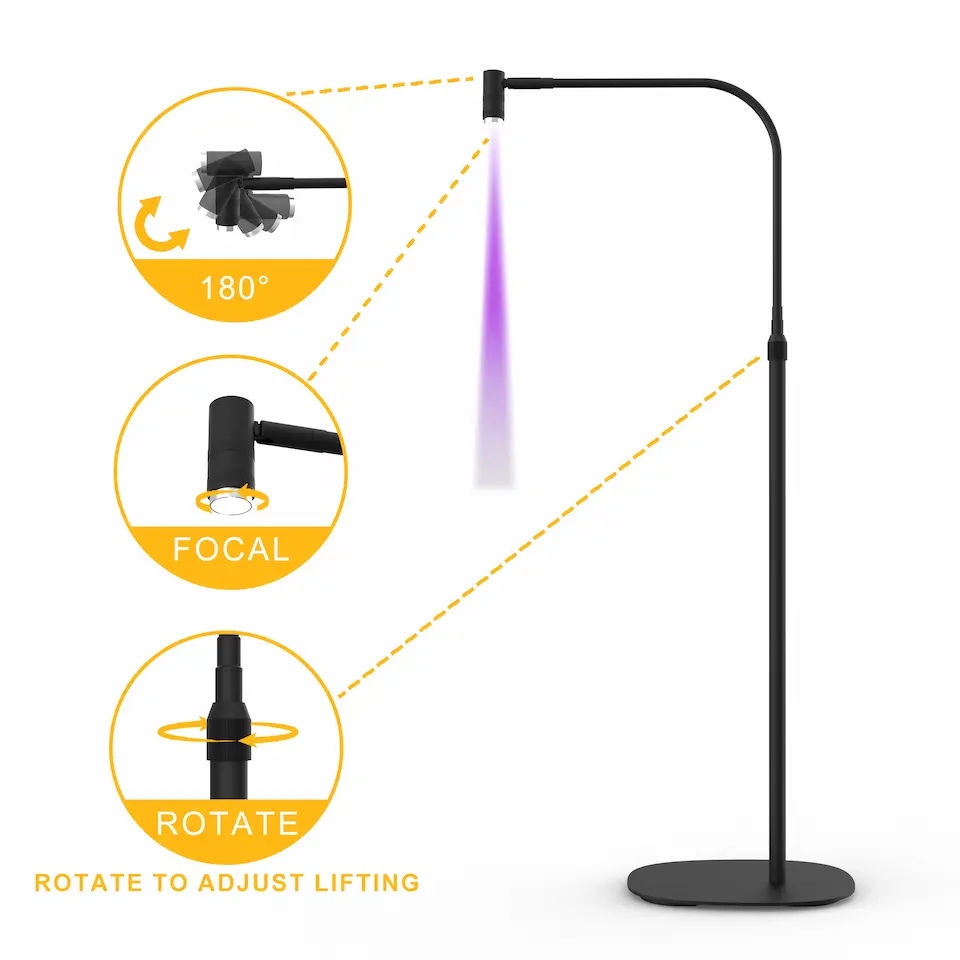
- Gooseneck Drifting & Metal Fatigue: Cheap lamps use low-grade metal tubing for their adjustable arms. After a few weeks of being bent back and forth to accommodate different clients, the metal suffers from fatigue. The arm loses its internal friction, causing the heavy lamp head to slowly “drift” or droop downward. This constantly moves the UV beam out of focus, forcing the artist to stop lashing and readjust the equipment.
- Base Instability: Salons are dynamic environments. Artists are rolling around on saddle chairs. If a lamp has a lightweight, poorly balanced base, a simple bump can send the entire unit crashing to the floor, destroying the LED diode instantly.
- Pedal Latency and Micro-Switch Failure: The foot pedal is the ignition switch of the entire UV system. Cheap wireless pedals use low-budget micro-switches and poor radio frequency (RF) transmitters. On a salon floor—which is exposed to dust, accidental liquid spills, and dropped tweezers—these cheap pedals fail quickly. This results in “latency” (a dangerous delay between pressing the pedal and the light turning on) or “ghost clicking” (the light failing to turn on at all).
The Seminglight Standard:
We believe a Commercial UV Lash Lamp should feel like an invisible extension of the artist’s body.
- Industrial Damping: Our gooseneck arms are engineered with high-tension mechanical damping. They offer buttery-smooth adjustability but freeze perfectly in place the exact millimeter you let go—zero drift, zero drooping, year after year.
- Weighted Commercial Bases: We design our floor stands with perfectly calibrated counterweights to ensure a low center of gravity, preventing accidental tip-overs in busy aisles.
- Zero-Latency Micro-Switches: Our wireless foot pedals are built with industrial-grade, sealed micro-switches and stable RF transmitters. We guarantee a hyper-responsive “tap-to-cure” experience that never breaks the artist’s flow state and withstands the rigorous reality of the salon floor.
Conclusione
When it comes to sourcing Professional Lash Supplies, especially capital equipment like a UV curing system, you simply cannot afford to be swayed by superficial marketing hype and inflated spec sheets.
Un vero Lampada UV commerciale per ciglia is not defined by how many watts it boasts or how futuristic its touchscreen looks. It is defined by restrained and precise optical power that cures micro-drops without heat spikes. It is defined by wavelength stability that prevents chemical bond failures. And it is defined by heavy-duty mechanical damping and switches that survive the grueling reality of daily B2B operations.
Stop gambling with your brand’s reputation—and your profit margins—on high-RMA, white-label toys. Partner with a true source manufacturer who understands the engineering behind the art. Explore the rigorous mechanics behind the Seminglight UV Ecosystem today, and invest in equipment genuinely built for commercial reality. View our full professional UV lash lamp range for specs that match these engineering standards.